Alzheimer’s Acceptance: Blog 2 – The Term Accept/Acceptance

The term ‘acceptance’ is used a lot in day-to-day conversations, but do we really know what it means? Is accepting Alzheimer’s an easy task to do? How do I accept that Alzheimer’s is now in my life? Today’s Alzheimer’s Acceptance blog looks at the answers to these questions and more!

Hello and Welcome to Sweeney’s Blogs!

This blog is going to discuss the definitions of the terms accept and acceptance. In the blog, I aim to discuss what these phrases mean, how they relate to Alzheimer’s, the effect that they can have on both our Mental and Physical Health and about how even though the words are only short words, their definitions carry with them much larger impacts on everyone.

The words Accept and Acceptance are words used almost instinctively in day to day life. Usually, when you use the word you don’t really think about it as a complex word, a word with a deeper meaning in some instances. This can be the case with numerous words. Their original definition may seem easy to comprehend however if you look deeper into the meaning it can lead to questioning the majority of what you already know.

The Oxford Dictionary defines Acceptance as an “agreement with or belief in an idea or explanation”.This definition seems very easy to understand and digest. However, it is not always that simple. When it comes to Alzheimer’s and similar illnesses such as dementia the word Acceptance can have a much more of an impact and an insightful meaning.
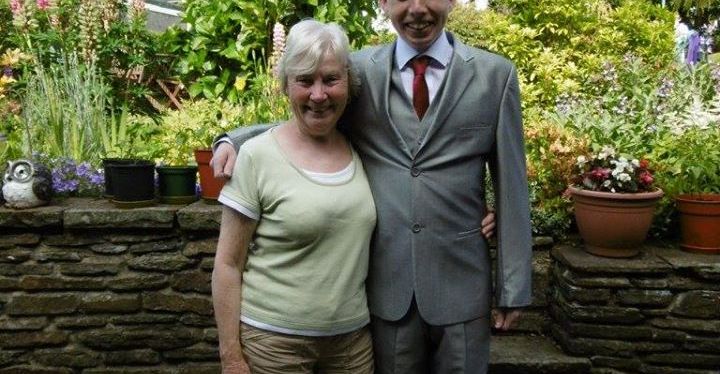
In my experience Accepting Alzheimer’s was an incredibly hard thing to do. I didn’t know what to even try to think of first let alone try to understand certain parts. Do I accept that my grandmother, one of the most influential people in my life, will never be the same? Do I accept that I will slowly have to watch my grandmothers memories fade away? For all of the secrets that I told her to become non-important?

It was these questions that revolved around my head on a daily basis. I found myself asking questions such as Why My Grandmother? What has she done to deserve this? Will she forget me? How will I move on with that? These questions almost seemed impossible to answer in my eyes at the time. I could barely sleep which led to me getting even more frustrated with these questions.

The interesting thing with acceptance, however, is that you can break it down to very small pieces and work your way up from there. You slowly begin to accept that even though the grandmother, friend or relative that you know will never be the same person again, they are still there. There is still a piece of the person there, no matter how small it may seem to be.

You slowly learn your own way of how to accept these small milestones and you work forward from there. In order to maximize the quality of life for the person who is suffering from Alzheimer’s, you need to fully accept the condition, no matter how impossible it may seem.

The way that I learnt to accept the fact that my grandmother had Alzheimer’s was by putting my mind purely on creating my Alzheimer’s Awareness website Don’t Forget Me: http://www.dontforgetme.org.uk. I needed a way to channel my emotions into something with a meaning. A resource I could use to help others who were going through similar experiences, a way to create a community around this horrible illness.

The motto/slogan for Don’t Forget Me came from here: For every memory lost, another is formed. This was the slogan that I used to fully complete and comprehend my grandmother’s condition. I understood and accepted the fact that even though the grandmother I knew all of my life was going to slowly disappear in front of my eyes. I learnt to try and make newer better memories to try and replace the memories that have been lost or forgotten.

Thank you so much for reading this week’s blog for Alzheimer’s Acceptance. This blog was an interesting one to write as it allowed me to link in my own personal experience alongside a method of how I coped. As with every blog I post all feedback is greatly appreciated, please message me what you think. If you have any queries or questions please get in touch.

I understand this is a longer blog than usual so I want to say a big thanks for reading and I’ll see you in the next blog!

James

Acceptance isn't always paper-thin, sometimes it's like climbing a neverending staircase - James Sweeney

Alzheimer’s Acceptance – Blog 1 -Introduction

Hello all,

This is going to be the first blog in my new Alzheimer’s Acceptance series. This blog is going to act as an introduction into the series of blogs that will be released in the upcoming weeks regarding this topic.

Acceptance. A single word with hundreds of meanings and hundreds of obstacles. To accept a new reality or a new set of obstacles are things people face in day to day life. This series of blogs is going to focus on the different variables and facts you need to acknowledge and accept in relation to Alzheimer’s.

Alzheimer’s is a very complex and interesting topic that can really be confusing to get your head around. People try to tackle it as one subject and one milestone which has ill-advised effects on both our Mental Health as well as our Physical Health. To even try and understand an illness such as Alzheimer’s as just one entity can ultimately make acceptance next to impossible. To truly acknowledge and accept what is going on in someone’s head and how to cope with it you need to break the condition down into smaller more manageable milestones.

By splitting the problem into smaller manageable milestones, you allow yourself to increase your understanding on a step by step basis, slowly learning and accepting each point as appropriate. This helps your mind make sense of what is going on and allows you to think rationally about the right steps that you need to take. Breaking down the problem eases the pressure on both you and the person suffering. You can slowly understand different bits gradually, instead of having to do it all at once.

Thank you for reading today’s blog! I feel like I am really going to enjoy writing this series as I am going to be able to link my own personal experience in with the topic. If anyone has any feedback on this blog or any other blogs that I have done please do get in touch! If anyone has any suggestions for blogs they want to see or feedback they want to give then please do not hesitate to message me as well!

Thanks as always,

James Sweeney

Learn to walk before you can run 

Alzheimer’s: The Bookcase Analogy

The Bookcase Analogy is a theory I first found through a video, which was created by The Alzheimer’s Society . The theory is one of the many theories used to describe how Alzheimer’s affects a persons mind. The Bookcase Analogy is a great way to describe and visualise Alzheimer, as well as the effect that it has on your life.

The Bookcase Analogy is an excellent theory used to describe the affect Alzheimer’s has on a persons mind. The theory starts out like this: Imagine a persons mind as a Bookcase. As you get with every Bookcase, there are several shelves on the Bookcase. In our example each shelve is a decade(10 years).

Now imagine the Bookcase gets damaged. When books fall off the bookcase they are lost and/or misplaced, this is similar to how Alzheimer’s affects the mind. The books in this instance correspond to memories. If they fall off the shelf they are lost or missing. This leaves gaps in the shelves and or memories. This can lead to certain people having to relive the death of a loved one or numerous other tragedies that have happened in their life. This can be very upsetting for the sufferer.

These absences of memories can be very confusing to the person who has Alzheimer’s. These can lead to them having enlarged emotions. What I mean by this is that certain emotions can be amplified by this stress. Sufferers can become very anxious, stressed, jumpy or any other sort of emotion caused by this stress.

Books can also be swapped on a bookcase. This is an excellent way to link a bookcase to Alzheimer’s. The swapping of books can be linked to how Alzheimer’s meddles with people memories. If a bookcase if damaged or the books are swapped it can cause great confusion and can possibly lead to violence not usually seen by some people who are suffering with Alzheimer’s.

Image result for confusion

This damaging of the bookcase can also lead go the sufferer getting confused about how old they are. People can suddenly think they’re 30 years old when they’re 70 or they could think that they are 80 years old when they are only 40. This confusion can also relate to mood swings. People can get really annoyed that they cannot remember certain memories and it cab lead to them becoming very angry or upset very suddenly. Although these mood swings are usually temporary, they can cause a great deal of unrest for the casualty and of course surrounding family and friends.

Thank you for reading and I hope you have learned something new today. Any feedback on this blog would be appreciated. you can either contact me via the contact form provided on the website or via the Facebook page.

James Sweeney

“It occurred to me that at one point it was like I had two diseases – one was Alzheimer’s, and the other was knowing I had Alzheimer’s” – Terry Pratchett

A Grandmother, Mother and to all a Friend

This is a poem I made for my Grandmother, when I found out that she had Alzheimer’s Disease. The poem is a very personal one for me and can also be located on my Alzheimer’s website, Don’t Forget Me. The poem acts a nostalgia train for me going through my life and the memories that I share with my Nana.

Note: Cap is a nickname that my brother made for my grandfather 🙂

A Grandmother, a Mother and to all a friend,
A person who would inspire you to the very end.

For a person who did so much for so many,
If she needed help she would try not to ask for any,
A nurse for years and a sister to her ward,
If you ever wanted to go for a walk she would be first on board,
A strong lady who could walk for miles,
Would take you up and down the aisles,
A Grandmother, a Mother and to all a friend,
A person who would help you to the very end.

For a Nana who devoted her life to Cap,
She could make a killer bacon bap,
A devoted wife, partner and the very best friend,
The two together were the ultimate blend,
A woman who would help no matter who you were,
Who would help you see clearly if your mind was a blur,
A Grandmother, a Mother and to all a friend,
A person who you would admire to the very end.

For a Grandmother who would go for walks down the beach,
She would always share advice, never to preach,
For all the walking we did on the rocks,
She never thought to comment on my very weird crocs,
For the rock pools we would look for all day,
A task that would need us to go all around the bay,
A Grandmother, a Mother and to all a friend,
A person who would guide you to the very end.

For a woman who could make the very best scone,
Any memories of her will never be gone,
A kind patient and incredible baker,
She would not even tell me off when I was a troublemaker,
A lady who could make the tastiest teisin lap,
She always would let me steal Caps cap,
A Grandmother, a Mother and to all a friend,
A person who would inspire you to the very end.


Thanks for reading my poem dedicated to my grandmother, my best friend, my hero. If you would like to let me know what you thought of the poem, please drop me a message in the comments or through our Facebook page. Although my grandmother’s Alzheimer’s has stole the memories from her, they’ll never take them away from me!

Thanks for reading & I hope you have a lovely day!

James Sweeney