

Good morning 👋
Hope your day is off to a brilliant start!
We’ve talked a lot about stuttering on the page over the last seven years; however, today, I wanted to do something a little different…
While there are lots of different forms and experiences of stuttering, a couple of years ago I came up with my own phrase for something I’d noticed in my life: “memory stuttering.”
Now, before we go any further, this isn’t an official speech therapy term or anything like that. It’s simply the name I gave to a pattern I’d started noticing. So, let’s take a look at what this means.
Hello and Welcome to Sweeney’s Blogs!
Have you ever walked into a situation and immediately remembered how difficult it was the last time?
Imagine a place or situation that you associate with an unfortunate memory. It could be a phone call, somewhere you received bad news, or a place where you didn’t feel as confident as you normally would.
The moment you arrive, it’s almost as if your brain replays what happened before.
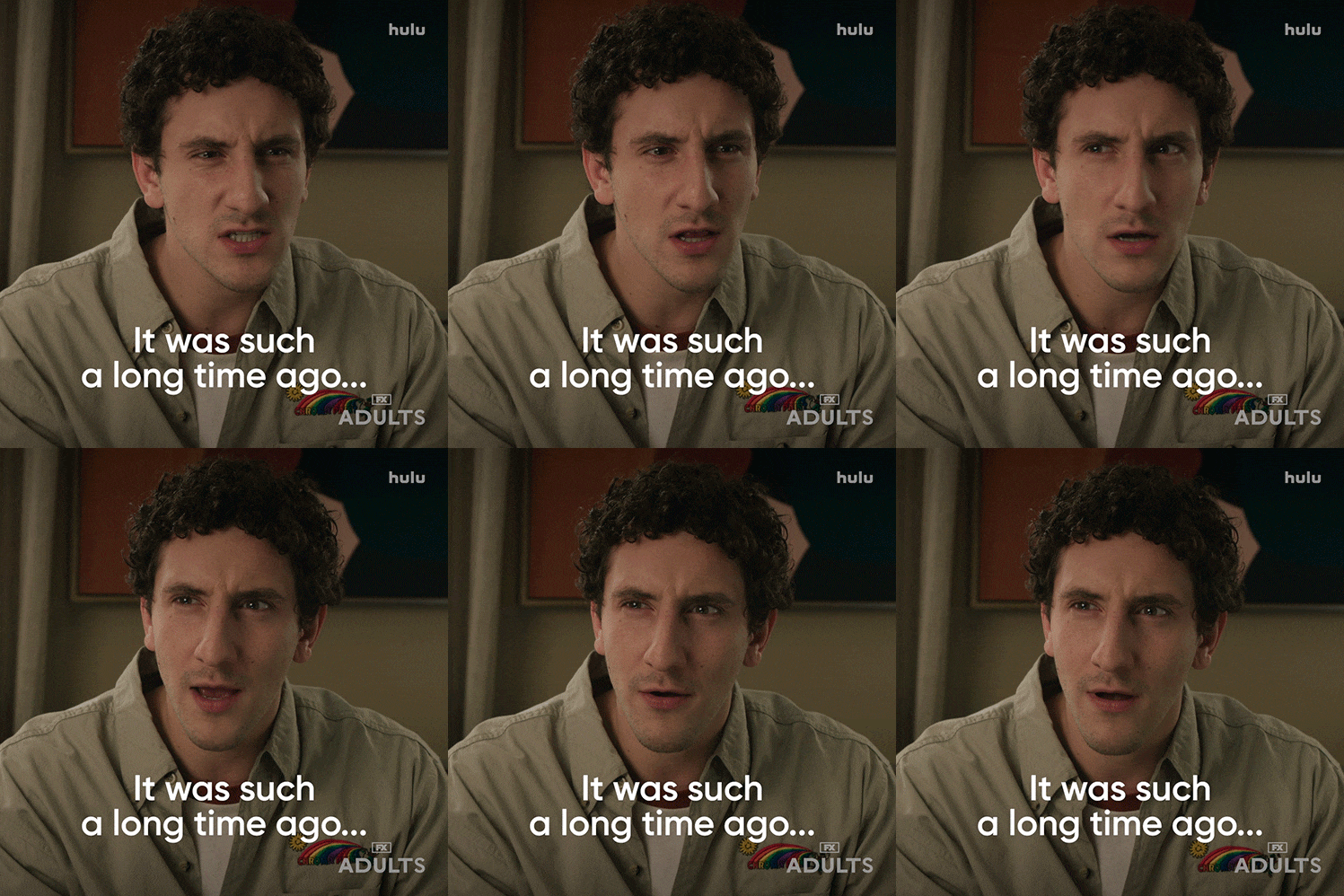
For me, this is something I’ve often experienced with my stutter, and how I manage my speech fluency.
A few years ago, I came up with my own phrase for it: memory stuttering.
It’s not an official speech therapy term, at least I don’t think it is anyway. It’s simply the name I gave to those moments when previous speaking experiences influence how I feel before I’ve even said a word.
What I find is that it largely isn’t about my actual speech; it’s the anticipation, the association that you have with a particular memory or the confidence in the situation that governs how it all plays out.

To add a bit of context, let me tell you a little story, about a Sweeney from 2019:
This was during the second year of my university course, where I was trying to find a business that I could work in for my upcoming Professional Placement Year. After a fair few submitted applications, I made it very far in the process with a particular firm.
I won’t go into the specifics of this, as that would be better in a story for another day, but I didn’t end up successful in getting the position. When I asked why, it eventually came out that it was because of my stutter.
This, of course, knocked my confidence quite a lot and left me feeling rather dejected. However, I still had a placement to try to secure, so on I went with applying for roles.

When I got the offer for my next interview, the rejection began to surface its head once again.
Every interview that followed carried a little extra weight. Before I’d even logged onto the Zoom call or stepped into the room, part of me was wondering whether my speech would once again become the deciding factor.
Nothing had actually happened yet, but my brain had already started writing the script.
I had, in essence, begun to fall into a memory stuttering cycle – where I was inside of my head, making my speech worse due to what happened in the past, instead of living in the present and believing in myself and what I was really capable of.

This time around, the kindness of another recruiter is what started to help me to bounce back from this. I was having a screening phone call with a recruiter, and I mentioned that I had a stutter and if it would negatively impact my chance of getting the role.
What started as a little chat, only meant to last around 10 minutes or so, turned into a half-hour call, where the recruiter shared that I was never in the wrong with the previous role, and I had a choice to make – I could either let the memory and feelings linked with it take over everything, or I could take it for the expereince that it was and move forward, knowing that I would ultimately find something much better.
Looking back, I don’t think the recruiter told me anything I didn’t already know. What they did do was remind me that one person’s opinion doesn’t have to become your reality.
Somewhere along the way, I’d allowed one experience to carry more weight than it deserved. Memories are incredibly powerful; however, they don’t always tell the full story. Sometimes, we have to take a step back and ask ourselves whether we’re listening to the memory itself or the meaning we’ve attached to it over time.

With all of this being said, memory stuttering works the other way around, too.
If you’re heading back to a place, or going out with a group, that you’ve got really positive memories with, or that you feel naturally more confident with, I’ve found that I’m much less likely to stutter. It’s almost as if your brain tells you – “It’s okay. You haven’t got anything to worry about. You can be yourself”.
For every difficult memory I carry with me, there are now dozens of positive ones too: conversations that flowed naturally, friendships that began through the most random of means, and being able to speak in front of former students at my old university.
It’s all about taking a balanced mindset on life. There’ll be good days, and there will certainly be bad days.
The mistake I made back in 2019 wasn’t experiencing rejection. The mistake was allowing that one experience to speak louder than all of the others. Sometimes, the memories we carry with us can become so loud that they convince us the future has already been written, when in reality, we’re still holding the pen.

That’s all for today’s blog. Thanks a lot for joining me on this journey through the mystery that is memory stuttering.
The next time you find yourself worrying about a situation because of a previous experience, try to remember that one memory doesn’t get to decide what happens next.
As always, thanks for reading, and I hope you have a lovely day!
James

