A couple of weeks back, I got challenged by my professional mentor, Polina, to start writing an Achievement/Gratitude List, which is a list of all of the accomplishments and achievements that I am proudest of in my life.
I’ve never really done anything like this before, and found that it has had a very large positive impact on how I see myself.
Let’s take a bit of a closer look at this in today’s blog!
Today, February 4th, is Time to Talk Day 2021!! This is one of the most important days of the year in the Mental Health calendar, and is an event which lies very closely to my heart. Time to Talk Day is a social movement which continues to work to change the way in which we think and act surrounding our Mental Health & Wellbeing.
Let’s take a bit of a deeper look into Time to Talk Day and my hopes for it in today’s blog!
I have written quite a lot of blog series here on Sweeney’s Blogs, and as I haven’t done one for a couple of weeks now, I was thinking, should they make a return? I have been considering bringing blog series back to the page for some time, so what I thought I would do over the next couple of blogs is to talk through some of my ideas for potential series, and see if anybody is interested in them!
Today’s blog is going to be about my potentially new Stuttering Series.
On Thursday 14th January 2021, I turned 22 years old! I was simply amazed at how many kind messages and birthday wishes that got sent through to me on Thursday, so I thought I’d write a blog to say a massive thank you to each and every one of you! We are living in very uncertain times at the moment, and it’s things like this that fill me with hope for what’s to come in the future!
2020 was a massive year for me, and yet, despite all of the highs and lows experienced in those 12 months, one of my key takeaways from the year would be the lessons that I learned throughout my 2020 Stuttering Journey. My Stutter has played a very large role in all of my life, I wouldn’t ever say that wasn’t the case, but 2020 seemed to be a year in which everything that happened, seemed to link back to that topic, my Speech and my Self-Confidence.
2020 has finally come to a close, words that some people thought they would never hear. The year has been beyond anyone’s predictions, with numerous highs and lows dotted throughout the past 12 months. Over the course of 2020, Sweeney’s Blogs grew at a rate faster than I could ever have imagined, more than doubling our views from 2019. That’s what we are going to be looking at in this blog, how Sweeney’s Blogs did this year!
I was scrolling through my Facebook feed during my lunch hour earlier on this week and a trailer for a film called “My Beautiful Stutter” showed up on my suggested posts. Up to know, I hadn’t heard of many films that were made to address the issue of Stuttering, apart from the odd exception such as The King’s Speech, or The Waterboy, so it is safe to safe that I was very intrigued on how they were going to go about doing it.
I have not been able to actually watch the film itself yet, but in today’s blog we are going to look at some of my hopes and aspirations as to what this film can do for the Stuttering Community and for the stigma that surrounds Stuttering as a whole.
On Saturday 31st October, I was asked to be a special guest on a brand new podcast, called “26 minutes with”, which has been created by Respect Mental Health and the amazing Benjamin Seal. It was an honour to be asked to e the first guest for the show and we are going to be taking a bit of a closer look at the podcast in today’s blog!
On the 16th of October 2014, I came three hours from death in an experience that changed my life. After being rushed to the hospital, tested all night and eventually operated on, it is a sheer miracle that I managed to survive and push through to where I am today. I’m James Sweeney, and this is my Peutz-Jeghers Story, what I refer to as “My Dance with Death”:
Mental Health is something that affects each and every one of us as people. Our Mental Health makes up who we are, who we want to be, and so much more. It is a phenomenally large field, that continues to grow each and every day. Over the last couple of years the spotlight and mainstream media have started to focus in more on the Mental Health and Wellbeing of people and international events, such as World Mental Health Day, which is happening today on the 10th October and so important for our future.
So let’s take a closer look into Mental Health and World Mental Health Day 2020!
Today’s blog is going to be a little bit different to the usual kind of blog that I write. The blog is going to be focused around a story which happened to me around 4-5 weeks ago, which played a really large role in the increase of the amount that I stutter over the last couple of weeks.
I mentioned in last weeks blog that I was going to talk about it this and, even though it is quite a personal story, I still feel like the messages that we can take from it are very important. It may seem like a very sad story when you read through the first few paragraphs, but there’s always a lesson and a moment of reflection that we can take from moments like this.
So without further ado, this is Sweeney’s Stuttering Story – The Call.
Being a part of a podcast has been something that I have always wanted to do in life, however, due to my Stutter, I always thought that this dream was out of my reach, but now I have proved myself wrong! This week I starred in an episode of the “It Starts with Action” podcast, where I talk about a large array of different things, and is going to be what today’s blog is about!
The family that we are a part of play a major role in our lives, from the start right through to the end, but can we use our relationship with our family as a determiner of whether or not we are successful in life? It’s a question that quite a lot of people think about at one point or another in life and is what today’s blog in the “What do we mean by Success?” is going to be about!
Today’s blog is going to be the twelfth blog in the Stuttering in Mainstream Media series and is going to be a summary of the series. In today’s blog, I will be recapping some of the key points I have made over the course of the series and bringing up some important points to remember.There’s more than one kind of Stutter/Stammer!
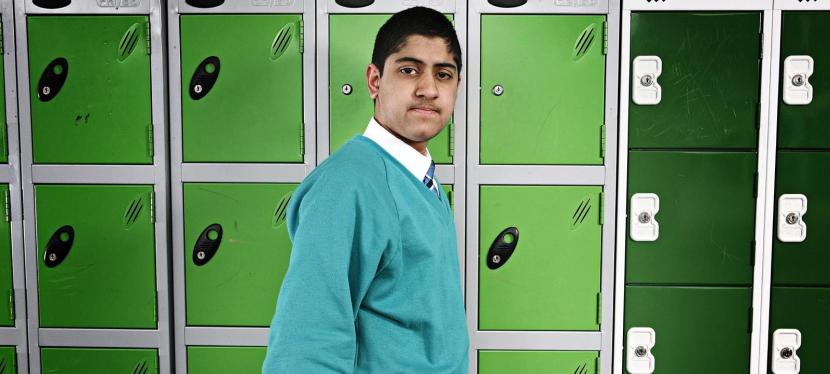
Musharaf’s Story is a really interesting story that was brought to life through the Bristish Documentary series, Educating Yorkshire. In this blog, we are going to be looking at what his story is and then we are going to look at the reactions that people had to his story on the TV show Gogglebox.
Hello and Welcome to Sweeney’s Blogs!
Today’s blog is going to be the 9th blog in the Stuttering in Mainstream Media and is going to be about Musharaf Asghar’s story. Musharaf, like most teenagers with a stutter, got bullied a lot through school. This bullying dramatically lowered his self-confidence and worsened his stutter. The story that the show focuses on is how Musharaf is preparing to do his GCSE English Oral exam.
Here is the video of Musharaf’s Story:
Close to the start of the video Musharaf tells us that when he stutters he feels like someone is keeping his mouth closed. I found this quite interesting at first because it is not similar to most of the other definitions that I have heard and made. I think that his form of stuttering is a mix of the effects of bullying on his confidence and the type of stuttering where you just cannot get your words out. I feel like this what Musharaf meant by someone is keeping his mouth shut.
The effects of bullying on someone who stutters do go a lot deeper than most people think. Coming from a background where I have experienced this I feel like I can give a fair view on the matter. If we take it at face value the bullying does obviously have an effect on your self-confidence. This damage to your self-confidence can make you stutter more which makes you feel more nervous about speaking. This creates a mental cycle of being scared to speak in case you stutter and get bullied for it.
The people who are around you when you are being bullied also carry a huge effect on the person stuttering. As more people find out that you have been/ are being bullied for your stuttering then it just makes the anxiety even worse. It gets to a point where even if you are with people you trust you just do not want to talk anymore in fear of being bullied for stuttering. It is a really bad cycle that can be really hard to break.
Close to the start of the video we can also see a coping technique that Musharaf uses to help manage his stutter. When he is answering the question in class he taps out each word that he speaks. I like to think of this as a simplified Rhythmical Thinking approach. Sounding out the words helps you to break down each sentence word by word it can help reduce the number of times you stutter. It is not a permanent fix but it can be very helpful for situations like answering a question in class.
The video also shows us how Mr.Burton tries to help Musharaf with his stutter. He uses a technique that he saw in the King’s Speech which involves speaking when listening to music. This style of stutter solution is a mix of distraction and Rhythmical Thinking. If you want to see more about Rhythmical Thinking you can view the blog here, https://sweeneysblog.com/2019/02/07/rhythmical-thinking-a-stuttering-solution/, but the basic of it is is you think of a beat in your head, speak to it then slowly increase the speed until you get back to speaking at a normal pace.
The Distraction solution is where you distract yourself from thinking about speaking. If we look at this case Musharaf is listening to music. While he is listening to music and reading the poem he hasn’t got time to think about/ worry about stuttering. Although this style of reducing the number of times you stutter may seem basic it does work very well if executed under the right circumstances.
Musharaf does go on to do his presentation very well and he does achieve the grade that he needs to get into college. The story itself is quite a positive one that does make you think of the effect a stutter does have on people. At the end of the video, when Musharaf is doing his speech to the other students, we can see how emotional all of his fellow students are getting. In my opinion, they can see the courage that he has and the determination he has to still speak even with his stutter. It just adds to a comment that I made on a blog a few weeks back, a stutter doesn’t stop you doing anything, the only thing that stops you is yourself.
We’ll now take a brief look at what the Gogglebox reactors thought of Musharaf’s story.
If you watched the video the whole way through you can see how their reactions change. At the start of the video, we can see a few of the reactors getting annoyed at Musharaf when he is struggling to get the words out. Phrases like “spit it out” are thrown about and they are not called for. People do need to start appreciating the effort that some people go to just to say a few words. It would be easy for Musharaf to just not say anything because of his stutter but he still tries, which shows a real judge of character.
Patience is one of the skills that most people do need to work on. I am not trying to have a go at the reactors in this video but I think that it goes to show the cultural “norms” that do need to change. As soon as they find out that Musharaf has a severe stutter they are more than happy to wait for him to speak but if they weren’t told they would continue to be angry at him stuttering. It does give us a look into how people do address people who stutter and how we do need to try and change it for the better.
Closer to the end of the video we do see them appreciate the confidence and determination that Musharaf has. We see them get emotional over him doing his speech and see them really appreciate what he has gone through. The main point of this part of the blog is to say, be patient. You never know of the struggles going on in someone’s mind when they are speaking so take some time to understand.
That’s all I want to talk about in today’s blog! Thank you all for reading! What do you all think? Have you heard Musharaf’s Story? What do you think of speaking while listening to music as a stuttering solution? What techniques do you use/ have you seen to help manage a stutter?
A quick few messages just before finishing today’s blog. Musharaf is now doing talks on his story and about his stutter. Although I haven’t been to one of his talks I have heard that they are very good and very insightful. I highly recommend seeing one if you are interested.
There is also a poll up now on the Facebook group regarding the future of this series. I am not sure whether to keep the series going or whether to put it on pause for a while. Vote in the Facebook poll on what you think should happen to the series!
Thanks again for reading!
Sweeney’s Blogs
Any money donated here will be put back into the business. This can be through marketing campaigns, upgrades to plans or for setting up future events!