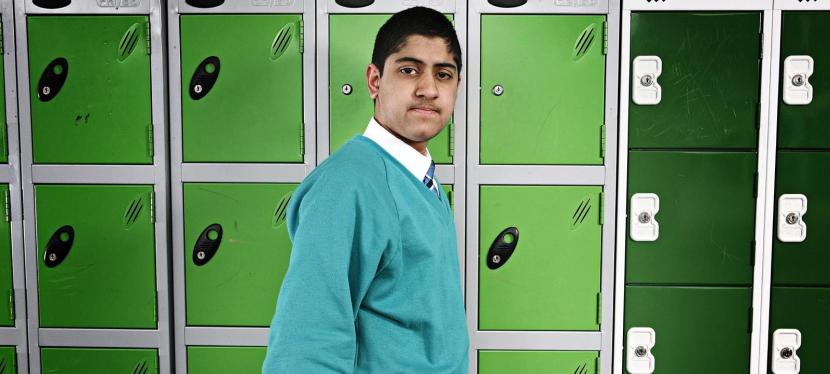
Stuttering in Mainstream Media – Blog 8: Musharaf Asghar’s Story

Musharaf’s Story is a really interesting story that was brought to life through the Bristish Documentary series, Educating Yorkshire. In this blog, we are going to be looking at what his story is and then we are going to look at the reactions that people had to his story on the TV show Gogglebox.

Hello and Welcome to Sweeney’s Blogs!

Today’s blog is going to be the 9th blog in the Stuttering in Mainstream Media and is going to be about Musharaf Asghar’s story. Musharaf, like most teenagers with a stutter, got bullied a lot through school. This bullying dramatically lowered his self-confidence and worsened his stutter. The story that the show focuses on is how Musharaf is preparing to do his GCSE English Oral exam.

Here is the video of Musharaf’s Story:

Close to the start of the video Musharaf tells us that when he stutters he feels like someone is keeping his mouth closed. I found this quite interesting at first because it is not similar to most of the other definitions that I have heard and made. I think that his form of stuttering is a mix of the effects of bullying on his confidence and the type of stuttering where you just cannot get your words out. I feel like this what Musharaf meant by someone is keeping his mouth shut.

The effects of bullying on someone who stutters do go a lot deeper than most people think. Coming from a background where I have experienced this I feel like I can give a fair view on the matter. If we take it at face value the bullying does obviously have an effect on your self-confidence. This damage to your self-confidence can make you stutter more which makes you feel more nervous about speaking. This creates a mental cycle of being scared to speak in case you stutter and get bullied for it.

The people who are around you when you are being bullied also carry a huge effect on the person stuttering. As more people find out that you have been/ are being bullied for your stuttering then it just makes the anxiety even worse. It gets to a point where even if you are with people you trust you just do not want to talk anymore in fear of being bullied for stuttering. It is a really bad cycle that can be really hard to break.

Close to the start of the video we can also see a coping technique that Musharaf uses to help manage his stutter. When he is answering the question in class he taps out each word that he speaks. I like to think of this as a simplified Rhythmical Thinking approach. Sounding out the words helps you to break down each sentence word by word it can help reduce the number of times you stutter. It is not a permanent fix but it can be very helpful for situations like answering a question in class.

The video also shows us how Mr.Burton tries to help Musharaf with his stutter. He uses a technique that he saw in the King’s Speech which involves speaking when listening to music. This style of stutter solution is a mix of distraction and Rhythmical Thinking. If you want to see more about Rhythmical Thinking you can view the blog here, https://sweeneysblog.com/2019/02/07/rhythmical-thinking-a-stuttering-solution/, but the basic of it is is you think of a beat in your head, speak to it then slowly increase the speed until you get back to speaking at a normal pace.

The Distraction solution is where you distract yourself from thinking about speaking. If we look at this case Musharaf is listening to music. While he is listening to music and reading the poem he hasn’t got time to think about/ worry about stuttering. Although this style of reducing the number of times you stutter may seem basic it does work very well if executed under the right circumstances.

Musharaf does go on to do his presentation very well and he does achieve the grade that he needs to get into college. The story itself is quite a positive one that does make you think of the effect a stutter does have on people. At the end of the video, when Musharaf is doing his speech to the other students, we can see how emotional all of his fellow students are getting. In my opinion, they can see the courage that he has and the determination he has to still speak even with his stutter. It just adds to a comment that I made on a blog a few weeks back, a stutter doesn’t stop you doing anything, the only thing that stops you is yourself.

We’ll now take a brief look at what the Gogglebox reactors thought of Musharaf’s story.

If you watched the video the whole way through you can see how their reactions change. At the start of the video, we can see a few of the reactors getting annoyed at Musharaf when he is struggling to get the words out. Phrases like “spit it out” are thrown about and they are not called for. People do need to start appreciating the effort that some people go to just to say a few words. It would be easy for Musharaf to just not say anything because of his stutter but he still tries, which shows a real judge of character.

Patience is one of the skills that most people do need to work on. I am not trying to have a go at the reactors in this video but I think that it goes to show the cultural “norms” that do need to change. As soon as they find out that Musharaf has a severe stutter they are more than happy to wait for him to speak but if they weren’t told they would continue to be angry at him stuttering. It does give us a look into how people do address people who stutter and how we do need to try and change it for the better.

Closer to the end of the video we do see them appreciate the confidence and determination that Musharaf has. We see them get emotional over him doing his speech and see them really appreciate what he has gone through. The main point of this part of the blog is to say, be patient. You never know of the struggles going on in someone’s mind when they are speaking so take some time to understand.

That’s all I want to talk about in today’s blog! Thank you all for reading! What do you all think? Have you heard Musharaf’s Story? What do you think of speaking while listening to music as a stuttering solution? What techniques do you use/ have you seen to help manage a stutter?

A quick few messages just before finishing today’s blog. Musharaf is now doing talks on his story and about his stutter. Although I haven’t been to one of his talks I have heard that they are very good and very insightful. I highly recommend seeing one if you are interested.

There is also a poll up now on the Facebook group regarding the future of this series. I am not sure whether to keep the series going or whether to put it on pause for a while. Vote in the Facebook poll on what you think should happen to the series!

Thanks again for reading!

Sweeney’s Blogs

Any money donated here will be put back into the business. This can be through marketing campaigns, upgrades to plans or for setting up future events!

£5.00

James

Stuttering in Mainstream Media – Blog 6: James Earl Jones

Did you know that Darth Vader’s actor had a stutter? The man behind one of Hollywoods most recognisable voices was mute for nearly eight years! These two facts alone help paint a brief insight into the pain that a stutter can cause a person. A stutter affects more than just your ability to speak, it affects you as a person.

Hello and Welcome to Sweeney’s Blogs!

Today’s blog is going to be the sixth blog in the Stuttering in Mainstream Media series! In today’s blog, we are going to be taking a look at how James Earl Jones, one of Hollywoods greats, story. We are going to take a look into how his stutter has affected him growing up and how he manages his stutter when filming for films and when he is on Broadway. The man is a stutterspiration in all essence of the word, what he has done whilst having a stutter is truly amazing!

Most people often forget that James Earl Jones, the man behind the voices of Darth Vader and Mufasa, had a terrible stutter in his childhood. An article that I found in the Health section of The Daily Mail, https://www.dailymail.co.uk/health/article-1255955/James-Earl-Jones-My-stutter-bad-I-barely-spoke-years.html, takes a closer look into his story. As we look into James’s story it is crucial to remember that despite having a stutter, he is still very successful in life.

The article and indeed the video above show us that growing up James felt that it was easier to remain quiet and some could say hidden to avoid being judged due to his stutter. The article points out a very interesting point. James Earl Jones, a man with one of the most recognisable voices in Hollywood was “almost mute as a child for eight years” due to his stutter. That just goes to show the inherent fear that a stutter can cause on an individual.

When talking about growing up with a stutter James talks about how he used to feel like he was “cursed”. The fear of not being able to talk tat a stutter creates truly is phenomenal. It is something that you cannot fully understand unless you actually go through it but it is something that you can begin to appreciate. Having the courage to push forward even when you cannot get the word out at times is shows a real mark of character. It is often the confidence we have in ourselves that dictates the effect that a stutter will have on our lives.

Further on in the article James talks about how “stuttering is painful”. He recalls when he had to read in Sunday school as a child and how the other children were ” falling on the floor with laughter” simply because he struggled to get the words out. This hits home quite hard for me as I was often in the same position growing up with a stutter, I remember going through Secondary school Engish classes, every time the teacher would pick someone to read I would pray to be invisible. The fear that a stutter can muster in a child is truly worrying. However, if we focus on the negatives then no change will be made. We need to look at the positives in life and in this case James’s story to see how we can help manage a stutter and live a “normal life” (whatever that means!).

Now as James mentioned above he got over a stutter using Poetry. Now poetry and other creative writing processes are very good techniques to use to help manage a stutter. I often use poetry when I am stuttering a lot as a way for me to centre myself. It gives me time to relax, think about what I want to say and then the time to actually say it.

Dictating your own work can be very very useful. If you haven’t tried the technique before I highly recommend it. If you don’t have anything to read then starting off is simple. Simply write 5-10 lines about yourself and then practise saying them out loud. Start off saying them by yourself and then as you practise more and more get other people in to listen to you. Eventually, you will be able to speak the lines without reading the paper. From this point, you start to practise reading the lines whilst also looking at people. It is a gradual process but patience is key for the endgame.

Another method that James said he uses to help manage his stutter is shouting at the empty seats before a play. Now there are quite a lot of people that use aggression as a form of managing their stutter. Personally, I haven’t used this method much in the past, I have tried it, but not for a long while. I will do a blog on it further down the line as I know Samuel L. Jackson uses it to help manage his stutter.

The last thing that I want to talk about in regards to James’s story is some final words he said at the end of the Daily Mail article. He says “When you are mute, you become a good listener – it’s all one-way.” Now even though I have not been mute I do really empathise with this statement. Now as a stutterer myself I have learned how to be a good listener. I’m not going to go into it in too much detail in this blog as I do want to do a whole blog on it in a few weeks but there is a link between someone who stutters and their listening ability. I find it quite an interesting link to learn about which is why I want to leave it for a future blog.

That’s all I want to talk about in today’s blog! What do you all think? Did you know James Earl Jones had a stutter? What do you think about the poetry method of managing a stutter? Let me know what you think!

One of the most important points that I want to leave this blog on is that a stutter shouldn’t hold you back. James Earl Jones is the prime example of this point. Granted his stutter nearly made him mute for eight years but he got past it. He didn’t let it control his life. He became the voices of Darth Vader and Mufasa with a stutter, so the question stands, what’s stopping you? Remember failure isn’t a bad thing, it’s a learning curve!

Thanks for reading and I’ll see you in the next one!

Sweeney’s Blogs

Any money donated here will be put back into the business. This can be through marketing campaigns, upgrades to plans or for setting up future events!

£5.00

James

Stuttering in Mainstream Media – Blog 5: The Printer Theory

How can you compare Stuttering to a printer? How can people understand a stutter if they haven’t got one themselves? How can learning about a stutter help treat it? I hope to answer these questions in today’s blog all about a Stuttering Theory I created myself.

Hello and Welcome to Sweeney’s Blogs!

Today’s blog is going to be the fifth blog in the Stuttering in Mainstream Media series and is going to be about The Printer Theory, a theory that I myself created to help visualise what living with a stutter is actually like. The theory itself can be interpreted in a number of different ways so if you interpret it a different way to how I am saying it that is more than fine.

I created The Printer Theory when I was asked to describe what living with a stutter is like to a few of my University friends this year. I had rarely been asked what living with a stutter was like before going to university so I didn’t have an answer ready at the time. This is when I decided to improvise and came up with The Printer Theory. Even though the theory doesn’t cover all aspects of life with a stutter I still think that it is a good place to start.

The first part of The Printer Theory is about the type of stutter where you just cannot get the words out, no matter how hard you try. So let’s say you have a document on the computer that you want to print out. You do all the normal things such as going to options, selecting print and then waiting for the printer to print the document out. Your document starts printing and then you get a paper jam in the printer.

If you have a paper jam then sending another twenty documents to the printer will not do anything, it will just put more pressure on the CPU of the computer and will affect the interrupts happening to the computer which will slow it down. Sending more documents to the computer will do nothing to help the actual problem which is the paper jam. This can easily be related to having a conversation with a person who has a stutter. If they are stuck on a particular word then asking them 20 more questions will do nothing to help them, it will just stress them out and might even lead to them stuttering more.

To fix a paper jam in the printer you would slowly find out the problem and then try a few ways to resolve it. Forcing the paper out when you have a paper jam will not help the issue, this is the exact same as dealing with a stutter. If someone who you are having a conversation with gets stuck on a word then you definitely should not try to force them to speak, they are trying they just cannot get the words out. What you need to do is simple.

The first step to helping someone who cannot get the words out is to actually realise that they are stuck on a word. If you recognise that someone is struggling then it makes it easier for you to understand and easier for them to get over it. The next step is to try a few different solutions. The first solution I recommend is maybe rewording the question that you asked them. Usually, if a person is simply stuck on one word then if you reword the question they will not even have to try and say it. There are lots of other techniques you can try if this doesn’t work but the key is to be patient, do not rush someone with a stutter as that will help no one.

One of the next links that a stutter has to a printer is when it comes to the order of entities. When you print something out, it is printed in a set order, this is the exact same as the way we speak. If the pages were printed in a random order then we would have to spend a lot of time simply working out the order of the pages and then what they are actually trying to tell us, this works the same with how we speak. We form sentences in a way that they are easy to understand and our words are in a logical order.

Just because a printer may take a long time to print out a particular page, it doesn’t mean that you write it out to try to beat the printer. If a printer was taking a while to print something out then you would wait patiently until it was finished, this links perfectly with a stutter. If a person is taking a while to say a particular word, sentence it does not give you the right to try and speak for them or just rush them into finishing. Rushing someone to speak when they have a stutter severely lowers their self-confidence and leads them to feel more embarrassed when they do eventually stutter.

This links in well to one of the main problems I have when speaking to people when they know that I have a stutter. Most people who do not have a stutter or who haven’t been close to someone who has a stutter think that finishing sentences for people who are struggling helps them out, it actually makes us feel useless. What people don’t actually think about, and this is not a criticism to people, it is just a fact, is that when we are stuttering we are trying really hard to get the words out. If you just jump in and finish the sentence for them, even if you do it with good intentions, then it makes us feel worthless. This paragraph is not meant to be having a go at anyone it is simply explaining something that most people don’t usually think of.

As you can see from the blog above there are lots of different links you can make between a printer and a person who stutters. There are indeed a lot more links that you can find but I have explained the main ones that I wanted to talk about in this blog. If you do find anymore and want to talk them through feel free to send me a message, I’ll more than happily respond!

Thanks for reading today’s blog! What do you all think? Next time you speak to someone with a stutter try and use a few of the points that I made today. Don’t rush them, be patient and please don’t finish sentences for them. I hope you all have a great week and remember to keep Highlighting the I in Difference!

Thanks again for reading and for all of the support,

Sweeney’s Blogs

Any money donated here will be put back into the business. This can be through marketing campaigns, upgrades to plans or for setting up future events!

£5.00

James

Looking into Male Mental Health – Blog 11: Getting back up again

Hello and Welcome to Sweeney’s Blogs!

Today’s blog is the 11th blog in the Looking into Male Mental Health series and is going to be about getting back up again. This is going to be the last blog in the series for a short while as I am putting the series on hold for a while to work on a series about Stuttering in Mainstream Media. I think that if I put the series on hold for a few weeks then when I bring it back it will seem fresher and I will have more time to plan the ideas out and give the blogs the attention and focus that they deserve.

Getting back up again is a short phrase that seems really easy to do, however, it is not always easy. I find that the two hardest parts about getting over a mental health problem are firstly accepting you have it and then discovering how you can pick yourself back up again. It can be easier than it seems, we can make an impossible task seem easy to solve simply by thinking about it in a different way.

I have touched on the prospect of putting yourself back together in a few blogs in this series, especially in my Rebuilding the Jigsaw blog.

Picking yourself back up is a task that I struggled a lot with when I went through a poor Mental Health phase. When I was in the mindset everything seemed so pointless and I couldn’t really see a way out. This mindset is a very dangerous one to be in as I was constantly thinking negatively, hence everything else that happened in my life was perceived in a more negative light to how it would usually be.

I can remember the days when I thought that I would never break through my problems and I used to think that they would consume me. What makes the matter worse is that in my head I was ashamed at myself for not having the strength or willpower to fix the mess that I had put myself in. This all ties back to what I was talking about when I mentioned your mindset earlier on.

My mindset at this time was very negative. The way that I approached life was all doom and gloom and in doing that I simply created more problems for myself. I eventually learnt to understand the fact that if I did not change my mindset then I would eventually break. After finally learning that I needed to change how I thought about things a new thought came to me, how does someone change their mindset?

This question had me stumped for a good number of weeks until I finally worked out what I was going to do. I first started to reduce my hours in work so that I had more time to do university work and time to relax. After this, I created a basic timetable, nothing too specific but a basic guide to what I should be doing every day.

From this point then I began to prioritise the work that I had to do off the volume and the due date. As I started to do this I could see that I had enough time to complete all of my work as long as I keep a cool head and relax. Even simply getting my university work back on track started to make me feel so much better about myself. After I had finished all the work then I used to schedule in extra time to fix any other problems that I was facing. This gave me the opportunity to simply think about university work when I was doing work and then think of how to solve my other problems when I had spare time.

Cutting down on unnecessary work hours and scheduling my time better made the world of difference when it came to changing my mindset. they allowed me to relax and to get myself out of the cycle of panic that I was constantly living in. This was one way that I found to get back up again, to keep on going.

There are a million different ways to get back up again, usually, it comes down to the person. As I say in the majority of these blogs and especially in the Jigsaw one mentioned above, all of these blogs come down to interpretation. If you use a different way to get yourself through a rough time and get back up again then that is just as valid as my way. Out of curiosity if you do use a different way to pick yourself back up then let me know in the comments below.

The phrases getting back up and picking up the pieces/picking yourself up all mean the same thing. They are simply the words for when you rebuild yourself/ when you find a way to piece yourself back together again.

That is all I want to talk about in today’s blog, thank you all so much for reading! What do you all think of today’s blog? How do you pick yourself up? Do you always use the same way or does it depend on the situation? Leave your answers in the comments!

As mentioned at the start of this blog, the series will be going on hold for a little while. Even though I do still really enjoy writing the blogs for the series I feel like I need some more time to properly plan out where the series is going and how I am going to write the blogs for it. A new series called Stuttering in Mainstream Media will be replacing the usual spot where this series is until i can bring the series back again. I hope you all enjoy the series and keep reading the blogs!

Thanks again for reading. Let me know what you think – I appreciate all feedback be it positive or negative!

Sweeney's Blogs Logo

Sweeney’s Blogs

Any money donated here will be put back into the business. This can be through marketing campaigns, upgrades to plans or for setting up future events!

£5.00

James

Valleys, Mountains and the Land in between

Hello and Welcome to Sweeney’s Blogs!

Today’s blog is going to be about an old phrase that I read in a Welsh book when I was younger. The phrase translates into English as The Valleys, The Mountains and The Land in between. I cannot remember the name of the book that the phrase was used in but I want to take a deeper look into how the phrase can relate to life in general.

I believe that this phrase has a lot of connections to life in general and think that if we can truly understand it then it can help us find peace in our daily lives. My take on the phrase is simple, I think that the phrase relates to how we live our lives. When we are having a good day then it can feel like we’re on top of the world (or a mountain?) and then when we have bad days it can feel like our mood has slumped, like we’ve gone down a valley.

river near mountains

The phrase helps portray life in a very positive way, which is crucial in modern day society. The way that I understand the phrase is that as the world has it’s mountains and valleys, we can have good and bad days. It makes the whole prospect of having different moods seem like it is part of nature, not a thing for us to worry about, a thing for us to accept.

I really like this phrase as when you are having a bad day, or at the bottom of a valley in this phrase, you know that your mood can become lighter and increase until you feel good about yourself and about life in general.

Now the one part of this phrase that I haven’t talked about yet is the land in between part. I interpret this as when you are feeling calm and relaxed, you’re not exactly super positive or happy but you are content. I think it is when you are feeling neutral and ok with life like you are the land in between a mountain and a valley.

That is all I want to talk about in today’s blog! I do have some smaller things to say before the post is finished however but these act more like announcements rather than part of the blog. Firstly I would like to apologise for the blog being later today than it usually is. This week has been my last week of exams at university and I had two really big exams to prepare for. Due to the time needed to prepare for my exams, I have not had the time to write a post as long as I usually do.

Also, I think it’s a good time to update everyone on how the blogs doing. If you are following the Facebook page for the blogs then you will be familiar with the fact that we are smashing through the milestones I set for the age initially. I am very pleased to announce that we are nearly at 2,000 total views. This is a massive milestone for the page as we have only been going for around 4/5 months! After we pass this milestone I’m aiming to hit as close to 5,000 total views by the end of the year as I can!

thanks! paper and black pen on wood surface

The last point that I want to bring up in this post is about promoting the page. I am aiming to launch another set of Facebook ads soon to try and get more people to the page. I am wondering if everyone who is reading this can possibly share the page on Facebook?

Sharing the page helps the page find new viewers who might really relate to the content. There are a few ways you can share the page. You can either do it via the page on Facebook or you can hit the share button at the end of this or any other of my blogs posts.

Thanks for reading today’s blog and I hope you all enjoyed! If you have a minute or two spare please leave a rating and a recommendation on the page! Hope you all have a great weekend!

Sweeney’s Blogs

Any money donated here will be put back into the business. This can be through marketing campaigns, upgrades to plans or for setting up future events!

£5.00

James Sweeney

Looking into Male Mental Health – Blog 8: The Stigma in Male Mental Health

Hello and Welcome to Sweeney’s Blogs!

Today’s blog is going to be the eighth blog in my Looking into Male Mental Health series and is going to look into stigma in relation to mental health. Today’s blog is going to talk about what stigma is in relation to mental health, what causes it and how it affects people suffering from Mental Health problems.

First of all, we are going to talk about what stigma is in relation to Mental Health. The website Health Direct, https://www.healthdirect.gov.au/stigma, describes stigma as ” a mark, a stain or a blemish”. Stigma occurs when “negative opinions, judgments or stereotypes” are targeted at people who are experiencing or have experienced Mental health problems.

It is clear to see that stigmas do not have any positive effects on people who suffer from Mental Health problems, they only add to their problems. It is this point that raises the question why does this stigma actually exist? It is possible to link the existence of this stigma to many different sources but after doing research there are two main causes of the stigma, the media and lack of understanding.

People who suffer from Mental Health problems are often labeled as being violent and dangerous in the media and are commonly associated with crime. In reality, people who do suffer from Mental Health problems are more likely to be victims of crime rather than a perpetrator. This is just one of the reasons why this stigma surrounding people and Mental Health needs to change, people are usually just working off assumptions, not actually looking at the facts surrounding the matter.

An article published by the Time to Change organization, https://www.time-to-change.org.uk/media-centre/responsible-reporting/violence-mental-health-problems, talks about the facts surrounding Violence and Mental Health. In this article, they talk about the British Crime Survey and how the responses from this survey further back up the point that the stigma surrounding Mental health needs to be changed quickly.

The British Crime Survey results show us that around 47% of crime is done by people who are believed to be under the influence of alcohol. This figure alone should act as an eye opener, nearly half of all the crimes committed are often done by someone under the influence of alcohol. The survey also tells us that around 17% of crimes are committed by someone who is believed to be under the influence of drugs.

Surprisingly the survey shows us that only 1% of crimes are committed by someone who is believed to be suffering from a Mental Health condition. These statistics clearly prove that the majority of people who are suffering from Mental Health conditions are not usually dangerous or violent, they are more likely to be the victim fo a crime.

If we add the two statistics for people being under the influence of alcohol and then the people who were under the influence of drugs, it equals 64%. 64% of crimes are believed to be committed by someone who is either under the influence of drugs or alcohol. When we compare this to people who commit a crime with a Mental Health condition we see that there is a 63% difference. It is 63% more likely that a crime has been committed by someone under the influence of drugs or alcohol rather than someone suffering from a mental illness.

Lack of understanding is the other major cause of the stigma surrounding Mental Healths existence. A lack of understanding can often be the main cause of a lot of problems in modern day society. It is often brought up that if you haven’t actually experienced or researched a mental health condition then you cannot actually understand it.

Mental health is such a large topic to look at that, unfortunately, people do end up just assuming that they understand it when in reality they have no idea. The fact that the majority of Mental Health issues can usually be talked through is often overlooked in society. Personally, I have had people tell me that I am too young to have any problems or that I have no valid reason to say that I have a Mental Health condition. It is these people who only fuel the fire that is Mental Health when really they should be helping us extinguish it.

When I was originally planning this blog I was going to do a large section on the effects that the stigma actually has on people suffering from a Mental Health condition but now looking back I feel like it is better to cover in its own blog.  I will briefly touch on some of the effects in this blog but will leave the in-depth explanations for a later blog.

The stigma surrounding Mental Health mainly affects peoples self-esteem. The stigma leads to people feeling like they are being judged constantly simply for having a Mental health problem. This feeling of being judged is only going to lower the person’s self-esteem which could lead to them experiencing more problems. This can develop a very dangerous cycle involving mental health which could end with someone getting hurt.

The feeling of being judged can also lead people to begin to isolate themselves. People tend to stop seeking treatment and support when they are scared of being judged. This approach leads to more and more problems. This can create another dangerous cycle where people just add more problems on top of the problems they already have. If they stop getting help to work through these problems then eventually they will break.

That’s all I want to talk about in today’s blog. What do you all think? Did you know about the stigma surrounding Mental Health before reading this blog? If so where did you find out about it? If not was it a useful thing to learn? how could we go about getting rid of this stigma? Is it a personal problem or a problem for society as a whole? let me know what you think in the comments or by getting in touch with me!

Thank you all for reading! Please let me know what you all think. I appreciate all feedback be it positive or negative! If you have a minute or two spare then please leave a rating on the blogs Facebook page, it lets me see if I’m doing a good job or not! Thanks for reading and I hope you’ll visit the page again,

Sweeney’s Blogs

Any money donated here will be put back into the business. This can be through marketing campaigns, upgrades to plans or for setting up future events!

£5.00

James Sweeney

Respect – Is it always earned?

Hello and Welcome to Sweeney’s Blogs!

Today’s blog is going to be about respect. I have been interested in doing a blog on respect for quite a while now, I just wasn’t sure whether to do it as a series or as a single blog. What I am thinking now is to do it as a solo blog for now and then if there is interest in it I will launch it as a series in the future, looking at the topic in more depth.

Respect can be shown in a number of different ways. People can earn respect through their age, their status, their job position and their life achievements to name but a few. We are taught when we grow up to always respect our elders, an important lesson I’m sure everyone can agree on but it does raise the question, is respect always earned?

This question is not meant to make it look like I have a lack of respect as this is not the case. I was brought up to always respect people and to treat people the way I would want them to treat me. I am the sort of person who values everyone’s needs before my own, which is an attribute that brings both positive and negative results. It took me a long time to notice that not all people are brought up the same.

Growing up I always use to go for a walk around the country roads near my house. Whilst on these walks we always use to stop and have a chat with the other walkers. This was something that I thought was a very common thing to do. I grew up in quite a close community where everyone knew each other and everyone would more than happily stop for a chat or even just say hello as you walked past.

It was only when I got to Year 11 in school where I decided to do my own little experiment that I noticed that not everyone had the time to stop and talk. The experiment that I did was based off how I got my food during lunchtime each day. During lunchtimes in Year 11 at my secondary school, we were allowed to go into the local town to get our food. This is how I first thought of the idea for my experiment.

I used to go to the same cafe every day for my lunch at school. The cafe was about a five-minute walk away from the school. Whilst walking to the cafe/sandwich shop I would always say hello to the people that I passed. The experiment here was to see how many people responded when I said hello to them. My goal of the experiment was to see how many people/ if any would actually respond to me saying hello and whether there was a difference in the responses between generations. The results that I did get were very surprising.

When conducting the experiment I said hello to 39 different people that I walked past, not counting other students in my year as they all responded. Out of the 39 people, only 2 people responded to me. One was a lady that use to help out in the local brass band that I was in and the other person was an older lady walking to the shops. If we break it down to the stats it does not look good.

Statistically speaking only 5.12% of the people that I actually said hello to responded. That means a major 94.88% of people simply did not respond to me. We can use these stats as an estimate to enlarge our sample size. Imagine now I said hello to 100 different people. Using these stats we can estimate that 5 of them will actually respond and the other 95 will simply ignore/not acknowledge it. These statistics further ask the question, is respect always given or should it be earned?

I understand that this is only one small experiment that I did but it still does paint quite an interesting picture. The experiment certainly makes me think of how I speak to people who I pass on the street. I always say hello to the people I pass however this experiment shows that the respect may not always be mutual. It’s quite an unfortunate insight into how respect can be perceived but it also makes you think a little bit more into how you treat others.

I am not saying that if you do not say hello to every person you pass on the street makes you a bad person as that is not the case. The main premise is that if someone takes the time to say hello to you then isn’t it a common decency to respond? We can also look at this from a mental health perspective. As I mention in quite a few of my blogs, especially my male mental health ones, simply saying hello to someone who is having a really bad day can make the world of difference to them.

Simply taking the time to have a quick conversation with someone, it doesn’t even have to be long, can really brighten up their day. Let’s try and do another challenge on this page. The next time you go to town and walk down a street say hello to a few people and see how many respond. Let me know how it goes! Did people respond? Were they people that you already knew or people that you have not spoken to before? Did it make you feel better about yourself? Leave a comment with how it went or get in touch with me through the contact page or on our Facebook page!

Thank you for reading today’s blog! What do you all think? Is respect always just given or should it be earned? Is it one or the other or even both? Do you think I should do a whole series on respect covering all areas or leave it as a ew smaller single blogs? Let me know what you think! I appreciate all feedback, be it positive or negative!

Thanks again,

Sweeney’s Blogs

Any money donated here will be put back into the business. This can be through marketing campaigns, upgrades to plans or for setting up future events!

£5.00

James

Looking into Male Mental Health – Blog 7: The Facts

Hello and Welcome to Sweeney’s Blogs!

Today’s blog is the seventh blog in the “Looking into Male Mental Health” series and is going to be called “The Facts”. Today’s blog is going to take a look at some of the facts that have been released regarding Male Mental Health and are going to be suggesting reasons for why there is a difference and how we can go about reducing it.

A newspaper article published by The Sun on the 11th May 2018, can be found here: https://www.thesun.co.uk/news/5911685/male-suicide-rates-uk-awareness-the-samaritans-2018/, gives us an insight into the differences between male and female suicide rates. The article informs us that the suicide rate in men is up to three times higher than female suicide rates. This statistic is really worrying and it is only the tip of the iceberg to what the article tells us.

According to The Sun, approximately 84 men commit suicide each week. This number alone is alarmingly high yet it gets even worse when we apply it through different timespans. If 84 men commit suicide each week, we can work out that approximately 4,368 men commit suicide each year. This number is absurdly high and action needs to be taken now in order to counteract this.

If we apply these statistics to the average lifespan of a citizen of the United Kingdom, which is around 80-81, then in one person’s whole lifespan there could be between 349,440 and 353,808 male suicides. Now, these facts are not intended to scare people but more so to inform them of how serious a situation this is. Even though these statistics are only an estimate, and they are taken from an article released in 2018, they still paint an unsettling image into the modern world.

Even though the figures we have calculated so far are alarming high it is still important to remember that suicide rates are still increasing. We can look at statistics all day long and see that there is a clear problem but if we do nothing to address and attempt to counter this issue then the problem is only going to get worse and worse. We need to learn from the mistakes made in the past, we need to focus on how we can grow together, not just as individuals.

photo-1499244571948-7ccddb3583f1

Change and adaptation are two of the things that humans are the best at. It’s what helps us learn from our past mistakes in order to make a better future, We need to adapt as a community to the phenomenon that is Male Mental Health. The spotlight has only recently been shone onto the crisis that we are facing and it is our job as a community to ensure that that light does not lose its focus.

It is all well and good for us to simply look at the statistics and hope everything is going to work itself out. If we do this then the number is only going to increase and increase until change and adaptation are no longer options. Steps need to be taken to try and combat these insanely high figures.

I have spoken a lot about why I think there is such a problem with Male Mental health in most of the blogs in this series. Although I mainly focus on stereotypes as the largest one there are still plenty more that arise. This is where the main problem comes up with Mental Health as a topi, although we can categorise some things as similar between different people, there are still and forever will be personal problems that are added to the mix.

As I have talked about in a number of blogs, identifying your limit is crucial as one of the main factors in tackling Male Mental health. Learning when enough is enough and what your limit is can save your life. Valuing the fact that life is about equilibrium, a balance can allow you to gain valuable insight into how you can grow as a person and not overwork yourself.

When I originally started writing today’s blog I was going to talk about a lot more statistics, however, after I wrote the first few paragraphs this quickly changed. We as a society often focus too much on statistics and they are often used to distract us from the actual matter at hand. However, that is not what I wanted for this blog. I wanted to use real facts that have been calculated and released to really show how important the topic of Male Mental health really is. The facts that I use are used to back up my points, not to distract people from them.

That is all I want to talk about in today’s blog. I have been holding back on doing this blog for quite some time as it is a very serious topic but it is one that I need to talk about before going further into this series. As for the future of this series, the polls that I ran last week have shown me that people do like this series and do want more blogs in it. I will be doing a few more personal blogs into my battles with mental health in the upcoming weeks as well as different theories and ideas that I can think of into how to tackle the global phenomenon which is Male Mental health.

What does everyone think of today’s blog?  Do the facts surprise you as much as they surprised me? Does seeing the facts make you want to try and combat them? If so how do you think we can combat them? Are changes being made? If so then are these changes enough? Let me know what you think in the comments or on the Facebook Page!

Thank you all for reading today’s blog in the Looking into Male Mental Health series! Let me know what you all think! I appreciate all feedback, be it positive or negative!

Sweeney’s Blogs

Any money donated here will be put back into the business. This can be through marketing campaigns, upgrades to plans or for setting up future events!

£5.00

James Sweeney

Change – A small word with a big footprint – James Sweeney

Looking into Male Mental Health – Blog 4: Personal Experience 1

Hello and Welcome to Sweeney’s Blogs!

Today’s blog is the fourth in my Looking Into Male Mental Health series and is going to look into my experience with mental health. I have mentioned a few times in my previous posts that I have gone through a lot of mental health problems in the past. I am going to be going over briefly what caused these, how I learned to resolve and manage them and how I try and balance things out in life so that I do not get overcrowded.

This is the first time that I am doing a blog this personal so I am going to be extra careful in how I phrase things and how much detail I go into. This blog is going to talk in detail about how the bullying I went through when I was younger affected me and grew without many people noticing. I am going to do more blogs like this in the future where I talk about how I struggled and how I managed to fix myself but I thought I would start here.

The mental health issues that I have been diagnosed with and have worked through have been Severe Anxiety, Depression and PTSD. I had the bad luck of encountering all of these at the same time due to a build-up of several factors which I will be talking about in a little bit. It took me a while to admit to myself that I actually had problems that I needed to solve but I quickly learned that it only got worse with time when trying to beat it by myself.

There was a range of factors that led me to have mental health problems, one of the largest was bullying. Bullying has been a large portion of my life and is a topic that I feel very strongly about. I have been bullied in the past, some cases it was only short term bullying but others lasted several years and really damaged my self-confidence and the image I had of myself.

The worse bullying that I faced was by one person for around ten to ten and a half years. Looking back at it now I realise how smart the person was actually bullying me. They started out by making comments about my hair colour, my freckles and other general comments then progressed into more offensive, deeper hitting topics. After realising that bullying me with comments about my appearance didn’t really bother me they began to bully me about my stutter.

My stutter has been a condition that is very personal to me and something I have tried to control over a number of years. I get very defensive about my stutter and I try really hard not to stutter much but sometimes I just cannot help it. The way that my stutter works is that it tends to flare up when I am feeling extreme emotions. This can mean that it flares up when I’m really happy, angry, sad, excited, nervous and in many other cases.

When this bully started to bully me simply for having a stutter it slowly began to erode at the defences that I had been putting up. After this went on for a while and they saw that I wasn’t reacting to it they decided to up the level and start isolating me from my friends. This particular bully would speak to people when I wasn’t there saying that I was talking about them behind their back, a thing that I would never do.

At first, when I got told that this was going on I didn’t think it would make a difference to my friends or my social life however it all changed in a few weeks. I stopped getting invited out with my mates and I began spending more time by myself in my house. This rise in the level of bullying was when I started to realise that I was struggling. I had been bullied due to my appearance, my stutter and now my social life had started to break.

The bullying stayed at this level for a few years and then it began to increase again. Before the level of bullying increased I counted that the bully had turned around 37 people against me. I had done nothing wrong and I couldn’t understand why people weren’t speaking to me and why they were actively ignoring me. My trust in people took a huge fall at this point and I only really trusted friends that lived close to me that I had known for years.

The next level of bullying started when I was walking home from school. I began to walk home by myself after school. This was because the bully lived near me and they would walk back the same way home that I did. It was at this time that some of my older friends began walking back with me. They would talk to me as they would usually and for the first few weeks I started to think that things were going back to the way they used to be.

After a few weeks, I started to realise that everything I was saying to my friends was being told to the bully. I found out after school that after I went home my friends would tell the bully everything I said to them and it would be used against me as ammunition.  This strange reality that was happening hit me hard. I started to notice that I was becoming more and more isolated and that the people I trusted were in with the bully.

The bullying did rise another level one final time before I put my foot down. I went off school for a while in Year 11 to have life-threatening surgery where I lost 3 foot of my small intestine (I might do a blog on my medical condition in the future). I came back to school 2 months early when I could barely walk with a six-inch scar going down my stomach. It was at this point where the bully decided to throw his comment at me. They just looked at me in front of all of the mates and said: “Can I store my change in your stomach James as you’ve lost some intestine?”. This one line broke something inside me.

Everyone around me started to laugh and I thought that I was completely alone. This was one of the main factors that completely broke me. After writing this I have decided that I will do more blogs in the future like this as it is quite long now as it is, that is without me adding in more points. I do not want to make the blogs too long that the main point of them dissolves.

Thank you for reading this weeks blog in the Male Mental Health series! If you are wondering what this blog has to do with mental health then it is meant to show how factors can build if not acted upon and how they can lead to you struggling unless you know when enough is enough. I didn’t put my foot down soon enough which is why I still struggle with the drawback effects now.

What do you all think of this week’s blog? Has bullying affected you in the past? How did you get past it? Do we as a society need to learn to identify secret bullies? What can be done about bullying that we don’t even see? Let me know any answers you have to these questions and your thoughts on today’s blog! There will be a few more blogs like this that talk about how I learned to overcome my problems in the upcoming weeks so stay tuned if you’re interested!

Sweeney’s Blogs

Any money donated here will be put back into the business. This can be through marketing campaigns, upgrades to plans or for setting up future events!

£5.00

James

Looking into Male Mental Health – Blog 3: Help is out there

Hello and Welcome to Sweeney’s Blogs!

Today’s blog is the thirds blog in the Looking into Male Mental Health Series and is called Help is out there. This blog is going to talk about what kinds of help is out there, how you can get in and how it can make the world of difference to you. I am going to be briefly talking about how I reached out for help and how services like counselling helped me solve some of my problems. I will talk about the problems that I faced and how I overcame them in more detail in next weeks blog as that is going to be the more personal blog in the series.

Help can often show its face in many different forms. Help can come in the form of friends, family or maybe a service such as counselling. Usually, people tend to learn the way they deal with mental health in their own way. For me, it took me a while to admit but the way that I coped was with counselling and with stress handling practices such as meditation.

Often the thought of asking someone for help is what people find the hardest. The thought that you will be seen as weak often forces people into hiding how they really feel. People tend to isolate themselves from others in hopes that they can solve their problems. The way in which we isolate ourselves is very clever. We tend to act as if everything is normal, we laugh and make jokes when inside just wants to break. It is this invisible isolation, this embedded fear that leads people to really struggle and can cause serious damage to their mental health. However, help is out there and being able to seek it is a strength often underappreciated.

The first place I tend to think of when I think of help is counselling. The ability to talk through your problems in a judgement free environment can often be a real burden off your shoulders. Counselling provides us with an extra tier of support, a fresh viewpoint, a change in perspective of how we see our problems and most importantly a form of release.

When I first started having counselling I did not think that it would help me. I saw me asking for help and talking about things with a stranger as a weakness and something I would never do however that view quickly changed. The counselling sessions that I had allowed me to work through my problems one by one, going into as much or as little detail as I wanted.

During my first few sessions, my answers to the questions asked were often short and defensive but over time I learnt to develop my answers. I learnt that my counsellor needed to understand me as a person, how I think, what I value, how I see the world before he could help me. I began to see that I could answer every question honestly and talk as if I was to a mirror in a way. Although counselling proved very effective for me there are a lot of other forms of help and support that people can try available.

A form of release and help can be as simple as talking to your friends and family. Being able to talk honestly to people who truly know you and value you can be a great aid when trying to conquer the entity that is mental health. Learning to be open and honest is a skill that is becoming more and more valuable in modern day society. Having a group of friends that understand you can really help when you are going through a tough time.

Although it is often overlooked, a simple how are you can make the world of difference to a person. Knowing they have someone to talk to and someone who will listen to them can often make them feel valued and feel like they can get through difficult mental phases. As life continues to accelerate and we take on more and more tasks it is crucial to remember that we need to make time for our family and friends.

If you see a person that you know or even don’t know struggling then stopping to help them or even briefly speak to them can be a real asset for someone. It does not only make you feel better personally but the difference you make to the person you talk to can be lifesaving. It does sound dramatic and drastic but simply talking to people can save lives.

There was a story in the news a few years ago about a boy in America that was about to commit suicide when a boy in his class noticed that something wasn’t right. The boy didn’t overload the boy or criticise him but just had a small conversation with him. Even though the boy didn’t know it at the time but he saved the boys life simply by having a conversation with him. The boy felt like he meant something and sought help and support to get through his tough time.

Social media and helplines can often be a good way to find support in some cases. There are more and more helplines being created by the day in hopes of helping people going through tough times. The growing rate of suicides in younger generations, especially in males is a very worrying site and people are trying to make a difference. There are facebook pages such as Mental Health Believe UK that are created for people who need help and support.

These facebook pages provide a platform for people to communicate with others and find a way out of the maze that is our minds. Helplines are also an often overlooked service. There are numerous helplines open such as the Samaritans whose goal is to help people. They are there to listen to people and to be a way for people to communicate in their own time and in their own space without being judged.

These are just a few of the forms of support that are out there and there are hundreds more. As we talked about in last weeks blog, the ability to know your limits can save your life. Knowing when to say no and when you have too much work on is a vital tool for anybody to have in their corner. Saying I’m struggling is not a weakness, it is a strength and that is what needs to be remembered. There is always help available, sometimes it is on your doorstep, sometimes it is on the phone. Dealing with your problems alone can sometimes work but when it doesn’t, don’t suffer in silence.

Thank you for reading this weeks blog in the Looking into Male Mental Health series! What did you all think? How do you cope when you are going through a tough time? Does social media help or hinder people who are struggling? Do we as a society need to change to try and reverse this crisis?

I’m trying to reach as many people I can with these blogs so if you can share or reblog it will make a huge difference! There are buttons available at the bottom of each blog post which allows you to share the blog to social media or you can share the Facebook page. If you do not know the Facebook page then you can click the Facebook icon on the sidebar and it will take you to the page or you can simply search Sweeney’s Blogs on Facebook.

As always feedback is greatly appreciated! Feel free to donate to the blog if you want too!

James Sweeney

Sweeney’s Blogs

Any money donated here will be put back into the business. This can be through marketing campaigns, upgrades to plans or for setting up future events!

£5.00

Poetry? A Guide to How to Manage Stress using Poems.

Hello,

If you have read any of my previous blogs, you would have seen that I have quite an interest in Poetry. I like to write poems about topics that interest or stress me out as it helps me manage my problems. In this blog, I am going to be describing how poems help me and how to write them.

Firstly I am going to talk about how poems help me. In times when I am stressed or worried about something I often feel a bit lost. In these times it is common for my stutter to flare up and it becomes increasingly hard to talk to people. It’s in these times that I start writing poems. I find that poems are a great way for me to express how I am feeling at a particular time at a level which is easy to understand.

Image result for poetry

These poems allow me to directly convey how I am feeling alongside what I want to say without running into obstacles such as my stutter or accidentally phrasing things wrong. I have written poems about almost anything. I have written poems about my stutter, my Grandmothers Alzheimer’s, Mental health and many other topics. I like to always follow a set pattern that I have when I make a poem which becomes evident if you have seen more than one of my poems. I like to always refer back to two lines or a paragraph in a way that is similar to how a chorus is repeated in a song.

Next, I am going to be talking about how to construct a poem. When I make a poem the first thing I need is a topic. After I have chosen my topic I look for particular words that relate to that topic. An example of how to do this can be seen as follows: in my poem about My Grandmother, I chose the topic of Alzheimer’s. From this topic, I picked out several words such as memories, kindness and friend to name a few.

Image result for poetry

From this step, I start to think of rhyming words for the topical words I have chosen. The number of rhymes for each word can vary based on the style of poem you want to create. I usually create my poem using rhyming couplets, however, I have constructed poems in the past using whole verses full of rhyming words.

If you are having trouble finding rhyming words then there are ways around it. Firstly you can find synonyms to the word that you want to use. When you have found an appropriate synonym you can again try to find a word that rhymes with it. If you are still having trouble rhyming a particular word then you can use a website such as RhymeZone.

Image result for rhyming

The next stage to develop your poem is to group together your rhyming couplets/paragraphs. Try to arrange the paragraphs/stanzas in a way that flows whilst also making sense. You want to present the theme of the poem you are writing about almost instantly to allow the reader to fully understand and appreciate it. To try and maximise the flow of the poem you could repeat two or three lines at the end of the paragraph. This helps to ensure that the poem is easy to follow and easy to read. After following these steps you should have an excellent poem!

Thank you for reading and I hope this guide to how to write poems has been helpful for you. As always any feedback on this blog and all of my other blogs is greatly appreciated! Hope to see you all again soon. If you have any questions or poems that you want me to check to be sure to message me.

James Sweeney

Nobody gets to live life backward. Look ahead, that is where your future lies – Ann Landers