
This is a poem from a fellow blogger. Very interesting piece, makes you contemplate what difference you make in life. If you enjoy the poem, be sure to check out their other work!

Blog Donations: What are they and How do I do it?
Hello and Welcome to Sweeney’s Blogs!
Today’s Blog is going to talk about the new payment/donation option found on my blog. I have added this feature in to try and earn some more money to reinvest into the business. I am first going to be talking about what the money that the donations collected will go towards and then I will be going into how to actually donate.
Any donations collected from the new feature will be reinvested into the business. This can be through things like marketing for the website, upgrading the content on the website or for creating events hosted by the business. All of the money collected will be used for business use and business use only.
In regard to how to donate. There is now a button on the sidebar of every page of my site. This button is the donation button. The donation amount is automatically set to £1. If you want to donate anything more than one pound then you can change the quantity. The quantity relates to how many pounds you will be donating. If you select a quantity of 5 then you will be donating £5 and so on.
The money goes through a PayPal account, you will need an existing PayPal account to donate or you can create an account in a few minutes. I have decided to use PayPal as it is one of the most secure ways to transfer money online.
Thanks for reading today’s blog! I know this blog was very different to what I usually do but I thought it would be important to talk about the new feature on the blog! Let me know what you all think!
James

Looking into Male Mental Health – Blog 2: Knowing your Limits
Hello and Welcome to Sweeney’s Blogs!
Today’s blog is going to be the second blog in my Looking into Male Mental Health Series. Today’s blog is going to focus on the importance of knowing your limits and finding balance in your life which will make a great link to next weeks blog which is going to talk about the help and support that is available.
Identifying your limits can be one of the most important things to do in life. Knowing how much work you can take on and complete at one time can be a tremendous asset to have in your corner. It is often a skill that is overlooked. People nowadays often tend to take on much more than they can handle which eventually leads to them struggling with stress, upcoming deadlines and a vast array of other forms of pressure. This stress and pressure have negative effects on a persons physical and mental health.
A recent video that I shared on the blogs Facebook page, the video:https://www.facebook.com/BBCOne/videos/2559921220689156/UzpfSTM4MjA2OTI2OTAxNzgyMDo0MTQ5MzAyNDkwNjUwNTU/?modal=admin_todo_tour, gives us an insight into how stress affects our body in a number of different ways. The video just further solidifies that fact that we need to learn how much we can handle and then use that to plan how we live our day to day life.
It is a common trend that we as people tend to take on as much as we can at once in hopes that we can somehow balance it all and achieve a standard of work that we want to achieve whilst also retaining a strong and stable mental health. It is a common trend in people especially younger people to somewhat undervalue the impact that stress can have on your health. People tend to become overtaken with their work and then begin to wall themselves off from their family, friends and society itself. This is very common to see with younger men and is a reason why male mental health has become such a worrying entity in today’s society.
In my opinion, it all stems from the age-old stereotype that men are too strong to talk about their feelings and that they can handle everything by themselves. This old stereotype holds no merit in today’s society. It has become a clear sign of someone struggling with mental health problems if they begin to isolate themselves from society yet this old stereotype almost seems to encourage it.
Asking for help and or support can be one of the strongest things a person can do. Knowing that you have taken on too much at once and trying to recover from it is one of the most vital things a person can do to preserve their mental health. It’s all well and good having a lot of things to do each day but if you do not give your mind and body enough time to heal and recover then eventually you will collapse.
It is not a nice thing to say but it is a fact of life. People have a limit to how much they can handle and if this is not respected then people will struggle even more. When people learn of their own limit then it can help them plan out what they need to do each day. This allows people to be organised and will allow them to complete all the work that they need to do.
Thanks for reading this weeks blog in the Looking into Male Mental Health series! What do you all think of the blog? Do you think identifying your limit is a good thing? Do you know your limit? Is it important to notice when someone is struggling and intervene before they ask for help? As always all feedback is appreciated,
James

Short Poem on Seasons
Hello and Welcome to Sweeney’s Blogs!
Today’s blog is a poem that I have written about the four seasons. It is only a small poem but I wanted to keep it simple as I am only recently getting back into writing poems and other forms of literature.
Here it is and I hope you enjoy:
The year starts off with a cold winter full of snow,
Which makes you sit inside watching your favourite tv show.
Hot water from the kettle is constantly on the flow,
As you sit inside waiting for the cold weather to go.
Next, we move into Spring where the plants do flower,
Where we always have to expect a short April shower,
As the trees new branches grow in strength and in power,
They look over their new horizons standing tall with posture and power.
Summertime is next with blue sky and sun,
Everyone can relax as their summer break has begun,
Parties and festivals are thrown for people to have fun,
Then they can go and get soaked with a big water gun.
Autumn is next bringing Thanksgiving and Halloween,
Where people can dress up like a king or a queen,
Leaves on trees start to turn brown from their original green,
Then they fall to the ground creating a classic autumn scene.
Thank you for reading today’s blog! What do you all think? Do you want to see more poems on the page? Which season is your favourite and why? If you could change a line in the poem what would you change and why?
Thanks,
James

Looking into Male Mental Health – Blog 1: The Introduction
Hello and Welcome to Sweeney’s Blogs!
This is going to be the first blog in a new series that I am going to be doing called Looking into Male Mental Health. There is a forever increasing worrying figure of male suicides in the last few years due to people not seeing another way out. Society is seen to expect men to take on everyone else’s problems but keep their problems to themselves, this causing dramatically high-stress levels which can lead to some men sadly taking their own life.
This series is going to be a more personal series for me as I am going to be talking about the mental health problems that I have encountered, how I learnt how to manage them and where people can go to get the help that they need. Due to the traumatic events that have happened lately, there has been a large spotlight shone on male mental health. The awareness that something needs to be done is increasingly daily however enough things are not being done.
Sadly stereotypes have developed in modern society where men are seen as ‘too strong’ to ask for help. This is madness. Noone is too strong to ask for help, admitting you need help is not a sign of weakness, it is a sign of strength. As I am going to be talking about in a future blog I have had counselling in the past. At first, I thought it was weak and would do nothing to me however after going for a few weeks I found it a great aid to me. Counselling allowed me to talk about the problems that I was having in a judgement free environment and then I could work with my counsellor to help resolve my problems.
People need to be informed of the signs that someone is struggling in day to day life. What quite a lot of people don’t understand is evening asking someone if they are alright can make the world of difference. Learning to distinguish the signs that someone is struggling is key when trying to help them. People often have their own symptoms and signs that they are struggling and simply recognising these can allow you to plan how you are going to help them resolve their problems.
Thank you for reading today’s blog in my new male mental health series. This is as far as I want to go for today’s blog as I don’t want the blogs to be too long that they lose their focus and the point they are trying to make. IF anyone has any questions or thoughts on the new series please let me know. What do you think about male mental health? Do we as a society need to change? Why is sharing problems seen as weak? Does strength in numbers become relevant here?
Thanks,
James

Balloon Theory – What is it and how can we use it?
Hello and Welcome to Sweeney’s Blogs!
Today’s blog is going to talk about a theory I created called The Balloon Theory. The Balloon Theory is a theory I created which displays how stress can affect a person and how people need to learn how to balance their stress levels and try and find ways to help lower the amount of stress they face in day to day life.
The logic behind the theory is pretty basic, picture a person as a balloon. The variables that they stress about then relate to the air filling the balloon. Now if a person fills too much air into a balloon ( a person taking on too much stress/work) then eventually the balloon will pop. There is only so much air that a balloon can hold, this is the same as people with stress.
This theory isn’t saying however that everyone can handle the same amounts of stress. There are lots of different kinds of people as there are with balloons. Certain balloons can hold more air than others, the same can be said for people. This does not make that balloon more superior than others however it is still something that needs to be taken into consideration.
The theory also helps us see that relieving ourselves of stress can often be a very valuable asset/achievement. Relieving a person’s stress is often similar to how you would release air from a balloon, slowly and gradually, not all at once. People also need to find a balance in their lives, you cannot just keep filling your balloon or else it will pop as mentioned previously.
The Balloon Theory is a theory that is still in development, it was an idea that I had a while ago and I am only now really developing it. What do you all think of the theory? Does it have merit? Do you know your limits when it comes to stress? How do you release air from your balloons/ relieve stress? If you want to add any development to this theory just let me know!
Thanks for reading today’s blog about the Balloon Theory I created. All feedback is greatly appreciated. If anyone has any questions then feel free to comment on this post, email me via the contact form or get in touch on our Facebook page: Sweeney’s Blogs!
James
Treat your body like a balloon, don’t overload yourself

Being Different: Blog 5 – Summary of the Series
Hello and Welcome to Sweeney’s Blogs!
This week’s blog is going to be the final blog in the Being Different series. This blog is going to be a recap of the series and is going to highlight why being different is a good thing and how a diverse set of friends and colleagues can be a great asset for you in life. I did originally plan to make this series longer, however, after careful consideration and planning, I have decided to finish it for now.
The Being Different series has focused on the positives of being different. I first started off by talking about what the word different means. I used the Oxford dictionary definition and then provided my own for comparison. My definition focuses on how being different is simply being yourself. How each person is different and that in itself is a good thing, not a bad thing.
I have talked about how having a diverse group of friends can lead to a person becoming: more multicultural, more open and more accepting of other people. The ability to understand different cultures is a great way to broaden your horizons and change the way in which you see the world. Learning about different holidays and traditions is an excellent way to see how people in different parts of the world with different religions and beliefs to you live.
The fourth blog in the series, The Changing Mirror, focuses on how a person’s mindset and view of things can change over time and how as we learn more things, the way we think of things changes. As we progress through life and encounter more of life’s obstacles, we grow as people and the way in which we think of certain things matures.
The size of the obstacles that we encounter can vary dramatically, the effect of the obstacles changes dependent on the person affected. The way in which a person deals with a problem or an obstacle is the leading factor in how a persons mindset and view of things can change.
Thank you for reading the Being Different series! As mentioned at the beginning of this blog, I was originally planning to take the series a little bit further. As I was planning on how to extend the series and write more blogs, I found that the ideas I had can be series in their own merit or ideas that touched on more sensitive issues that I want to discuss in later blogs. The good thing about this series is that it can be brought back at a later date however, for now, it is coming to an end.
Than you for reading this week’s blog! What do you all think? Has everyone enjoyed the series? Are there any comments you want to make, positive or negative? Do you think being different is a good thing? Let me know what you all think either by contacting me through the contact page on this website or via our Facebook page Sweeney’s Blogs.
James

Being Different: Blog 4 – The Changing Mirror
Hello and Welcome to Sweeney’s Blogs!
This is the 4th blog in the Being Different series. This blog is called “The Changing Mirror” and talks about how your reflection can change over time. This blog is going to focus on hoe your personality as well as your world view can change over time and how you can adapt this approach into day to day life.
I got the idea for this blog from a mirror in my house’s bathroom. The mirror has been in my house all of my life and is used daily. I have distinct memories of looking at the mirror throughout all stages of my life. Looking back through my memories I can distinguish the way that I felt when I looked in the mirror, what I was thinking about and how I saw the world and indeed myself.

Even though a mirror isn’t a living, breathing entity it can still act as an instrument to look through time. I can remember back to when I was five years old and going onto my tiptoes simply to try and look at the mirror. I didn’t really have an idea of how the world worked, I was just trying to learn as much as I could as quickly as I could.
When looking at the mirror over time though, you do notice that things do change. These changes can be very minor, or they can be major. Of course, as I was growing up my appearance changed. I started as a small happy child who thought that the world was positive, and no harm could come onto anyone, then I slowly started to understand more things about life and the world we live in.

I started learning about the balance that exists inside the world, how two neighboring countries can live in a completely different way. Learning how there is a clear difference between third world countries and first world countries and how this difference is slowly changing as we progress as a community and as people.
Furthermore, the way I think about things has changed a lot since I first started looking at it. When I first started looking into the mirror, I didn’t make many decisions, I was often told what to do and I had the majority of things done for me. As time has gone by the way that I think has changed. As I have experienced lots of different obstacles life has to offer, I have had to think things through differently.

I have learned to take more responsibility in my life. I now know how to look after myself, how to cook, how to clean and even day to day things like how to get a job and how to work. These jobs have required me to adapt however they have not made who I am change. That is the important part. Despite changing how I view certain things in life, the person that I am has not changed.
The unique things that I do are still unique to me. The things that make us different from other people are just as important as the things that we have in common with others. Life is all about finding an equilibrium between the differences and the similarities that everyone has. Being Different is nothing to shy away from, it is something to embrace. Just as I have seen changes when I have looked in the mirror, I have also seen similarities. This experience can be adapted to many other aspects of life.

It is often useful to evaluate the changes that you see when you look back at your life. What were the changes? What affect did it have on you? Was the effect positive or negative? Did changing the way you see certain things change you as a person? Let me know your answers to these questions through our contact page,
Thanks for reading this week’s blog, I hope you enjoyed! Evaluating your life at different stages can be a very useful thing to do, it allows you to see where you have gone wring and what you have done right in order to make the right decision going forward. If anyone has any feedback on the blog, please let me know. All types of feedback are appreciated, if I am doing something that you do not agree with then the only way, I can change it is if I know!
Thanks again and please get in touch if you have any questions,
James

The Breakfast Table Poem
Hello and Welcome to Sweeney’s Blogs!
This week’s blog is going to be a poem I have written about a family sitting around the breakfast table. The poem shows how you can take a simple idea such as making breakfast and transform it into a poem which tells a story.
The Breakfast Table
A family sit at the breakfast table,
With the radio on powered through cable,
Each of them with their own timetable,
With plans made to be very enjoyable.
A husband sits at the table smiling at his wife,
As he butters his toast with a knife,
Watching a documentary about wildlife,
He smiles loving his everyday life.
His wife’s waiting for eggs to cook on the pan,
She’s listening to Barry Manilow, of who she’s a fan,
Whilst ticking things off her day’s plan,
She smiles when she looks over at her husband, her man.
A family sit at the breakfast table,
With the radio on powered through cable,
Each of them carrying their own timetable,
With plans made to be very enjoyable.
Their son sits there doing his homework,
Smashing through equations, as easy as clockwork,
He starts drawing a picture of a barbarian going berserk,
Then stops to admire his artwork.
Their dog licks water from his bowl,
Barking happily, he starts to do a roll,
His tail wagging out of control,
He stares at his owners, ready for a stroll.
A family sit at the breakfast table,
With the radio on powered through cable,
Each of them possessing their own timetable,
With plans made to be very enjoyable.
Thank you all for reading! I hope you all enjoyed reading the poem. It was written in a different style to how I usually write but I quite like the design of it. If anyone has any feedback they would like to share, please do let me know, either on this blog, through the “Contact” page, or by messaging our Facebook page!
What do you all think? Does everyone enjoy the poems or do people prefer the more story tailored and series based blogs? If you like poems, what do you want to see me write about next? Let me know any queries or questions!
James Sweeney

Being Different: Blog 3 – The Positive Approach
Hello and Welcome to Sweeney’s Blogs!
This week’s blog is going to be taken a more positive view to the Being Different series. I am hoping to lighten the mood of my blogs in the next few weeks as they have been quite emotional as of late. This blog is going to talk about how being different is good and how it be a fun thing.
Being a part of a group full of different people can be a very good asset to have. Mixing with people who come from different countries, backgrounds and social groups can be a great way to broaden your horizons of life. Having the chance to experience a new way of life is a luxury that is often overlooked. We get the chance to learn about so many different cultures and beliefs, make the most of it!

The difference between one person and another is what makes friendships fun and interesting, if everyone were the same then things would get boring very quickly. Having other different people in your social group can help you think of ways to do things you otherwise wouldn’t have thought of. This can be adapted into a decision about what to do on a specific day to how to solve a complicated problem.
When I meet new people, I am always very interested in where they have come from. That does not specifically mean what country they have come from; it means where they have been brought up, the experiences with life they have, the qualifications they have, etc. I always try and learn as much about a person as I can without being intrusive. The way that I have been brought up is that to fully understand someone you have to understand the way they think, the way they do things.

I have been brought up in a community where everyone is valued based on their own assets. People are judged but in a positive way. The way that I have been raised is to say hello to people when I walk past them on the streets, to help people when they need help, to listen to people when they need someone. These skills are what can sometimes make me different. Different but in a good way.
It’s the differences that we all have that make us who we are. They are the stories that we tell, the experiences that we experience. The life that we live should be dictated by no one else but yourself. If we communicate and interact with people who we like, then day to day life can never get boring or dull. If you are with the right group, then any problems you have can be resolved somehow.
Thank you for reading and I hope you enjoyed this week’s blog! I’m currently looking for other people’s views on some questions. Do you think having friends from different backgrounds is a good thing? Do you think being multicultural is a good thing? What skills do you have that make you, you?
As always, all feedback is appreciated, if anyone has any questions or queries please message me. If you want to answer any of the questions above, then please send me an email using the contact me form on the next page.
James Sweeney

Alzheimer’s Acceptance: Blog 5 – Final Conclusion
Hello and Welcome to the final blog in The Alzheimer’s Acceptance series!
This blog is going to be a conclusion to the series and is going to wrap up some of the key points that we have talked about. I originally planned to make this series longer than what it is going to be by talking about different techniques that I have used to manage the stress and obstacles faced however I think it will be better to do in a different series.
As I have discussed in the previous blogs in this series acceptance is a word that can have a million definitions. Its difficulty can fluctuate based on the situation, the people involved and the environment in which it takes place. It is advised that to fully accept an entity/obstacle one must break it down into smaller, more manageable chunks.
I have really enjoyed writing the blogs in this series. Although the series can be seen as quite sad and emotionally based it is also a series that I felt like I needed to do. Writing in this harsh reality style is a good way to portray some stories which people are usually too scared or not comfortable in talking about.
Accepting Alzheimer’s is one of the hardest things that I have had to do in life and in all honesty, it is not something that you fully understand until you are in the position where you have to do it. I had read so many stories about it before going through it myself and had never once expected that it was going to be as hard as it was to do.
If you do ever find yourself in this position and need support, please do reach out. No matter how hard or how much you are suffering, there will always be someone there to help and support you. Please do not go through this alone, people can help you more than you may know at first.
Thank you for reading! If any of you have any questions about this series or any of my other blogs, please contact me. All feedback is listened too and appreciated!
James Sweeney

Alzheimer’s Acceptance: Blog 4 – Personal Experience
Hello and welcome to the Alzheimer’s Acceptance Series!
This is the penultimate blog in this series, Personal Experience.
If any of you read the story that came attached to the blog last week you will already know of what happened when my grandmother forgot me for the first time. It was one of the hardest hurdles I have had to jump over in my life. It was a hard hurdle but a necessary one.
Accepting Alzheimer’s is often a challenging but necessary obstacle. Once you accept that someone has Alzheimer’s then it allows you to develop ways to support them. This blog is going to talk about some of the experiences and struggles that I have had in accepting Alzheimer’s.
The first challenging that I had with Alzheimer’s was hearing that my grandmother had the illness. When I was first told by my mother that my grandmother had the illness I did not really know how to react. Thoughts whirred through my mind and I found myself asking should I be mad? Should I be sad? What should I feel?
I couldn’t comprehend how a standing stone in my life had now become like a broken pebble on the beach, broken away from its original self. In these months where I did not accept the illness, it caused lots of sleepless nights and damage to my university work. I had to learn how to be resilient to the illness before it would break me as well. This was but one of the obstacles I learnt to accept.
The next major obstacle came when visiting my grandparent’s house. I use to spend nearly two days a week when I was younger, a time which has sadly decreased in the more recent years. After hearing that my grandmother had Alzheimer’s I found it increasingly hard to visit their house. I was scared of being forgotten and I was scared that the person I would see would no longer be the person I grew up with. Even now after I have fully accepted my grandmother’s condition, I still find it hard to call over as much as I used to. It’s an obstacle that I am close to fully accepting and one that I am still thinking of ways to overcome it.
These are just two of the large obstacles I have had to understand and overcome in regard to my grandmothers Alzheimer’s. There have been many other obstacles that I have learned to accept but I thought it would be best just to focus on one.
Thank you all for reading the penultimate blog in my Alzheimer’s Acceptance series! Next weeks blog is going to be a conclusion to the series. I hope you’ve enjoyed the series, it has been a rather sad but informative series. If anyone has any feedback, questions or queries please get in touch with me!
James Sweeney

Being Different: Blog 2 – What does being different really mean?
Hello and Welcome to the 2nd blog in the Being Different Series!
This week’s blog is going to talk about what it means to be different and how you can perceive what being different really means. The Oxford Dictionary defines different as being ” not the same as another or each other; unlike in nature, form or quality”. This definition and in general the term different can often be perceived as a negative asset to have however it is all based off perception.
I have a long experience in being called different and odd throughout my life. When I first got called it I took it as an insult but after hearing it over and over again I began to take a new twist on it. There’s an old line that states “If everyone in the world was the same then the World would be a very boring place”. This phrase is very very true. We are all different but it is what makes life interesting. Meeting people from different backgrounds, religions, countries, it is something that I have always loved doing and is something that we should all try and do.
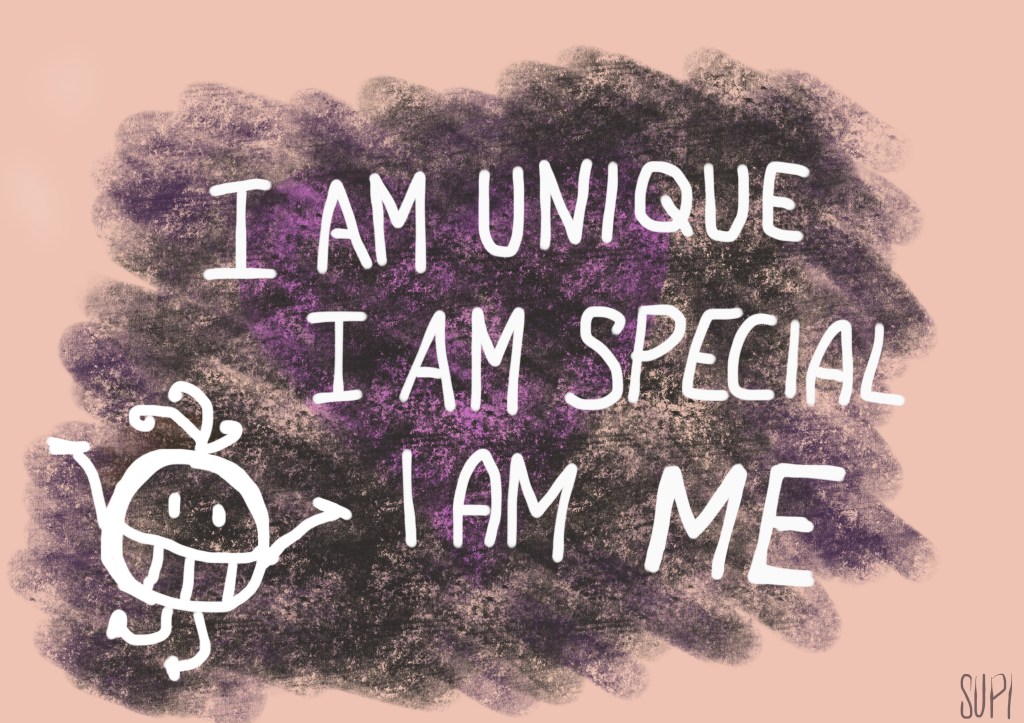
Being different does not define as “being wrong”. Simply being different from another person does not make you less interesting or less valuable as a person. That is the point that matters. At the start of this blog, I gave the Oxford Dictionary’s definition of different/difference but now I want to do something a little different, I want to give my own definition to what I see as the meaning of being different.
Being different is being you. It is not simply complying to societies version of normality, it is being an individual, being yourself. If you spend all of your time trying to fit on and blend in with others then you will eventually lose yourself and is it really worth it? Is it worth losing your morals and beliefs simply to avoid confrontation or isolation? That is a point that I want everyone to think about. When walking in life do you walk your own path or do you simply follow the same old path that everyone follows?
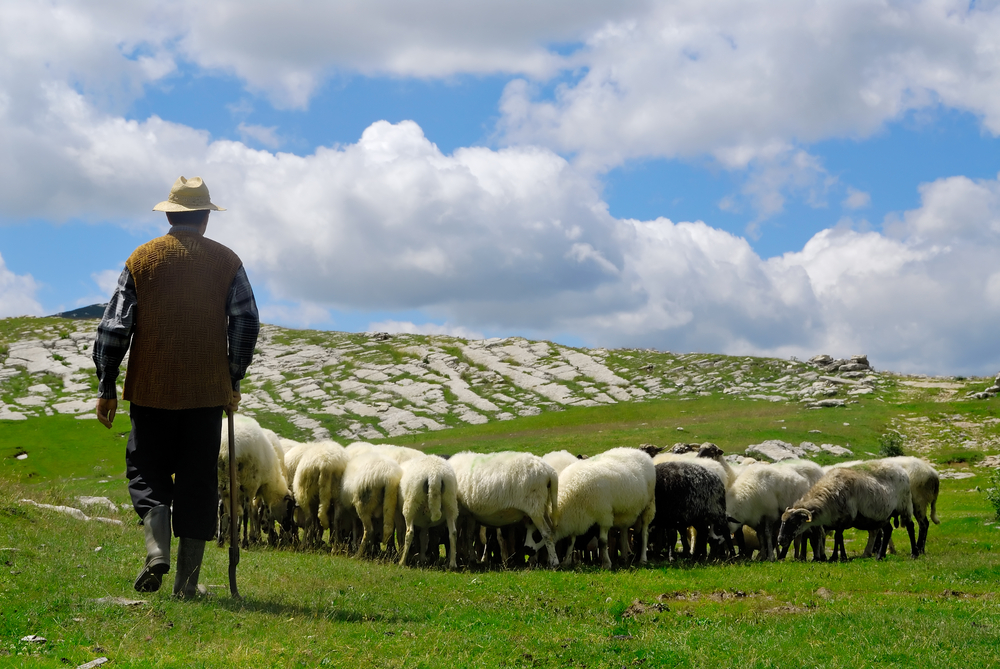
The vision that I always used to have about difference was the old Shepherd or Sheep analogy. While this analogy can be good at face value, looking into it there are so many factors. The question that I hear people ask, especially to younger people is are you a follower or are you a leader? In essence this is the same question as the Shepherd and Sheep question and is one that we really need to think of before asking.
Simply categorizing people under two categories does not fit for everyone. Some people may like to lead some things but take advice and follow guidance for others. Does this mean that the are half sheep and half shepherd? As funny as that may look it simply does not work in the grand scheme of things. There are over 7.53 billion people in the world and everyone is different.
Granted some people may have similar traits and interests but that does not make them the same person. We each do different things, feel different, think different, act different, we are different. The real question is do you see difference as a bad thing or an opportunity to broaden your horizons? It is an interesting question which poses a lot of food for thought.
Remember Being Different does not mean “Being Wrong” it means “Being You”.
Thanks for reading this weeks blog in the Being Different series. I hope you all enjoyed this week’s blog. If anyone has any feedback, comments, questions or queries about this blog or indeed any of my blogs then please send a message through the contact form on the next page or on our Facebook page.
James Sweeney

Alzheimer’s Acceptance: Blog 3 – Personal Alzheimer’s Story
Hello and Welcome to Sweeny’s Blogs!
This is the third blog in my Alzheimer’s Acceptance Series, My Alzheimer’s Story.
Today’s blog is going to be based around a story that I have written about the first time my grandmother forgot who I was. The story is quite a sad story but provides a real insight into the realisation for how Alzheimer’s can affect everybody’s lives.
The story is only on its draft phase at the minute so there might be changes added to it in the near future. Even though the story does take quite a sad and bleak narrative it is an excellent story to read. It is a very personal story that was quite hard to write.
You can view the story here: Alzheimer’s story
Thank you for reading! I know this blog is shorter than others but the story itself is very long and took a long time to write. Hope you all enjoy this weeks blog, if you do have any comments or feedback please let me know! If you have any questions or queries please get in touch and I will do my best to answer them all.
James Sweeney
Alzheimer’s Acceptance: Blog 2 – The Term Accept/Acceptance
The term ‘acceptance’ is used a lot in day-to-day conversations, but do we really know what it means? Is accepting Alzheimer’s an easy task to do? How do I accept that Alzheimer’s is now in my life? Today’s Alzheimer’s Acceptance blog looks at the answers to these questions and more!
Hello and Welcome to Sweeney’s Blogs!
This blog is going to discuss the definitions of the terms accept and acceptance. In the blog, I aim to discuss what these phrases mean, how they relate to Alzheimer’s, the effect that they can have on both our Mental and Physical Health and about how even though the words are only short words, their definitions carry with them much larger impacts on everyone.

The words Accept and Acceptance are words used almost instinctively in day to day life. Usually, when you use the word you don’t really think about it as a complex word, a word with a deeper meaning in some instances. This can be the case with numerous words. Their original definition may seem easy to comprehend however if you look deeper into the meaning it can lead to questioning the majority of what you already know.
The Oxford Dictionary defines Acceptance as an “agreement with or belief in an idea or explanation”.This definition seems very easy to understand and digest. However, it is not always that simple. When it comes to Alzheimer’s and similar illnesses such as dementia the word Acceptance can have a much more of an impact and an insightful meaning.
In my experience Accepting Alzheimer’s was an incredibly hard thing to do. I didn’t know what to even try to think of first let alone try to understand certain parts. Do I accept that my grandmother, one of the most influential people in my life, will never be the same? Do I accept that I will slowly have to watch my grandmothers memories fade away? For all of the secrets that I told her to become non-important?
It was these questions that revolved around my head on a daily basis. I found myself asking questions such as Why My Grandmother? What has she done to deserve this? Will she forget me? How will I move on with that? These questions almost seemed impossible to answer in my eyes at the time. I could barely sleep which led to me getting even more frustrated with these questions.

The interesting thing with acceptance, however, is that you can break it down to very small pieces and work your way up from there. You slowly begin to accept that even though the grandmother, friend or relative that you know will never be the same person again, they are still there. There is still a piece of the person there, no matter how small it may seem to be.
You slowly learn your own way of how to accept these small milestones and you work forward from there. In order to maximize the quality of life for the person who is suffering from Alzheimer’s, you need to fully accept the condition, no matter how impossible it may seem.
The way that I learnt to accept the fact that my grandmother had Alzheimer’s was by putting my mind purely on creating my Alzheimer’s Awareness website Don’t Forget Me: http://www.dontforgetme.org.uk. I needed a way to channel my emotions into something with a meaning. A resource I could use to help others who were going through similar experiences, a way to create a community around this horrible illness.

The motto/slogan for Don’t Forget Me came from here: For every memory lost, another is formed. This was the slogan that I used to fully complete and comprehend my grandmother’s condition. I understood and accepted the fact that even though the grandmother I knew all of my life was going to slowly disappear in front of my eyes. I learnt to try and make newer better memories to try and replace the memories that have been lost or forgotten.
Thank you so much for reading this week’s blog for Alzheimer’s Acceptance. This blog was an interesting one to write as it allowed me to link in my own personal experience alongside a method of how I coped. As with every blog I post all feedback is greatly appreciated, please message me what you think. If you have any queries or questions please get in touch.
I understand this is a longer blog than usual so I want to say a big thanks for reading and I’ll see you in the next blog!
James
Acceptance isn't always paper-thin, sometimes it's like climbing a neverending staircase - James Sweeney
 Sweeney's Blogs