For most people, being a teenager is perhaps the most exciting stage in life. But being a teenager is full of ups and downs. A teenage girl is mostly bombarded by images of how Hollywood defines “beauty.” Billboard and magazine advertisements, t.v. and radio commercials, and even the Internet is saturated with images and messages…
I am looking for a new writer for the page. What I am looking for from a writer is either a few individual blogs or for them to write a series of blogs that I can publish. There will be no salary for the blog however you will be given full credit on each post you do. The blogs can be about anything as long as we can find a link back to Stuttering, Stress or Mental Health.
Everyone is welcome to write a few blogs for the page, there is no restriction on who can write and who cannot. I will read through each post before it is published just to make sure it is okay and reads well but it is very unlikely that I will actually make changes to someone’s work. If I do see any changes that need to be made then I would discuss it with you beforehand.
To apply for the blog writing job/position simply fill out the form below or you can complete the form on our Facebook page if that is what you prefer. I will try to look through all of the forms ASAP. If you do not want to become a fully-fledged writer for the page that is also completely fine. If you just want to write one or two blogs or one every so often then that is great as well, as long as you let me know!
The form on this page is going to be really easy to fill out. The name and email address fields take a few seconds to fill out then we get to the comments part. In the comments section try and write about why you want to write a few blogs/ what sort of blogs you want to do and any experience you have in writing. Experience isn’t needed to be a blogger on my page but it is nice to see some work beforehand if there is any available.
Thanks for reading and I will see you all in the next blog! If you are interested in being a blogger for the page please fill out the form below!
Today’s blog is going to be the 10th blog in the Stuttering in Mainstream Media and is going to be about the Do’s and Don’ts of Stuttering. Even though I have mentioned in a few previous blogs about how stuttering affects everyone differently, there are a few trends that have emerged. In this blog, I will be briefly talking about some of these trends and just bullet pointing others. If you can think of any that I haven’t included please let me know. I have seen a few other posts about the do’s and don’ts of stuttering but they only focus on stuttering in children, whereas stuttering affects people of all age.
Do’s
Allow the person to finish their sentence, don’t interrupt them.
Be Patient – if a person is stuttering, please give them time to finish. Rushing someone who stutters will make them stutter more and will cause them to get stressed.
Encourage a person with a stutter to speak, don’t leave them alone in the quiet.
If someone is stuck on a word and cannot get it out, try rewording the sentence/question? Rewording the question allows the stutterer to think of a different word that they may not get stuck on.
If you’re meeting someone new, mention that you have a stutter if you think it is important too
Live a normal life – A stutter doesn’t stop you doing what you want to do in life
Maintain eye contact and concentration when talking to someone with a stutter
Reassure a stutterer if they are nervous
Speak to a speech therapist about your stutter
Don’t
Allow a person with a stutter to isolate themselves.
Be embarrassed about stuttering
Criticise /Mock their stutter – There are some things that you just cannot joke/ have banter about. A stutter is one of them.
Don’t say phrases like “slow down” or relax”. Even though they sound like you’re helping, they just make it worse.
Finish a sentence for them – People think it helps but all it does is make a stutterer feel worse about themselves and think that their voice is less valuable than someone else.
Lose your patience if someone is stuttering a lot
That’s all for today’s blog! Even though this blog may seem a bit shorter than the others in the series it is still very important. Like I said at the start of this blog if you can think of any points that I have missed, please let me know and I will add them. There are lots of guides out there for stuttering but they are mostly aimed at children. I wanted to do a series that was targeting every age.
In regards to the future of this series, I think that I am going to keep it going for a little bit longer. The polls that I ran last week came back fairly in favour of keeping the series going so I will do around 2/3 more blogs for it and then I will put it on hold for a while. I am not 100% sure at the minute what the next series will be but when it comes closer to the time I will run a few polls on the Facebook page.
Thanks for reading and I hope you all have a great day!
Sweeney’s Blogs
Any money donated here will be put back into the business. This can be through marketing campaigns, upgrades to plans or for setting up future events!
“I’m such a jerk. How could I have said that?” “I’m a looser. I’ll never get anywhere.” “I’m so stupid. I should have learned this by now.” “I don’t fit in. I don’t belong with these people.” “I’ll never be good enough. I’ll never do it right enough.” “I’m permanently emotionally damaged. I’ll never be…
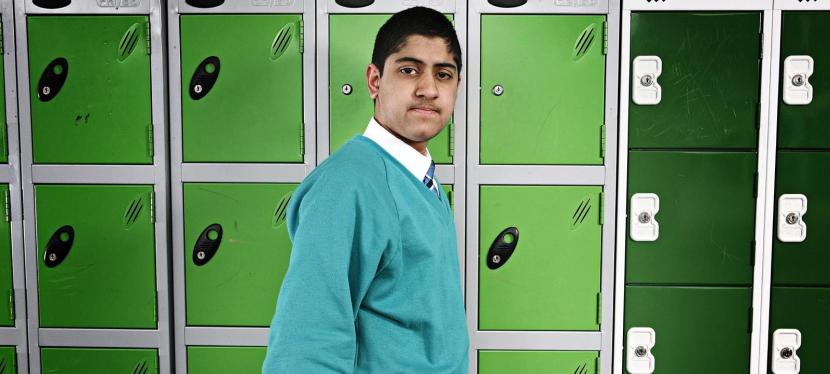
Musharaf’s Story is a really interesting story that was brought to life through the Bristish Documentary series, Educating Yorkshire. In this blog, we are going to be looking at what his story is and then we are going to look at the reactions that people had to his story on the TV show Gogglebox.
Hello and Welcome to Sweeney’s Blogs!
Today’s blog is going to be the 9th blog in the Stuttering in Mainstream Media and is going to be about Musharaf Asghar’s story. Musharaf, like most teenagers with a stutter, got bullied a lot through school. This bullying dramatically lowered his self-confidence and worsened his stutter. The story that the show focuses on is how Musharaf is preparing to do his GCSE English Oral exam.
Here is the video of Musharaf’s Story:
Close to the start of the video Musharaf tells us that when he stutters he feels like someone is keeping his mouth closed. I found this quite interesting at first because it is not similar to most of the other definitions that I have heard and made. I think that his form of stuttering is a mix of the effects of bullying on his confidence and the type of stuttering where you just cannot get your words out. I feel like this what Musharaf meant by someone is keeping his mouth shut.
The effects of bullying on someone who stutters do go a lot deeper than most people think. Coming from a background where I have experienced this I feel like I can give a fair view on the matter. If we take it at face value the bullying does obviously have an effect on your self-confidence. This damage to your self-confidence can make you stutter more which makes you feel more nervous about speaking. This creates a mental cycle of being scared to speak in case you stutter and get bullied for it.
The people who are around you when you are being bullied also carry a huge effect on the person stuttering. As more people find out that you have been/ are being bullied for your stuttering then it just makes the anxiety even worse. It gets to a point where even if you are with people you trust you just do not want to talk anymore in fear of being bullied for stuttering. It is a really bad cycle that can be really hard to break.
Close to the start of the video we can also see a coping technique that Musharaf uses to help manage his stutter. When he is answering the question in class he taps out each word that he speaks. I like to think of this as a simplified Rhythmical Thinking approach. Sounding out the words helps you to break down each sentence word by word it can help reduce the number of times you stutter. It is not a permanent fix but it can be very helpful for situations like answering a question in class.
The video also shows us how Mr.Burton tries to help Musharaf with his stutter. He uses a technique that he saw in the King’s Speech which involves speaking when listening to music. This style of stutter solution is a mix of distraction and Rhythmical Thinking. If you want to see more about Rhythmical Thinking you can view the blog here, https://sweeneysblog.com/2019/02/07/rhythmical-thinking-a-stuttering-solution/, but the basic of it is is you think of a beat in your head, speak to it then slowly increase the speed until you get back to speaking at a normal pace.
The Distraction solution is where you distract yourself from thinking about speaking. If we look at this case Musharaf is listening to music. While he is listening to music and reading the poem he hasn’t got time to think about/ worry about stuttering. Although this style of reducing the number of times you stutter may seem basic it does work very well if executed under the right circumstances.
Musharaf does go on to do his presentation very well and he does achieve the grade that he needs to get into college. The story itself is quite a positive one that does make you think of the effect a stutter does have on people. At the end of the video, when Musharaf is doing his speech to the other students, we can see how emotional all of his fellow students are getting. In my opinion, they can see the courage that he has and the determination he has to still speak even with his stutter. It just adds to a comment that I made on a blog a few weeks back, a stutter doesn’t stop you doing anything, the only thing that stops you is yourself.
We’ll now take a brief look at what the Gogglebox reactors thought of Musharaf’s story.
If you watched the video the whole way through you can see how their reactions change. At the start of the video, we can see a few of the reactors getting annoyed at Musharaf when he is struggling to get the words out. Phrases like “spit it out” are thrown about and they are not called for. People do need to start appreciating the effort that some people go to just to say a few words. It would be easy for Musharaf to just not say anything because of his stutter but he still tries, which shows a real judge of character.
Patience is one of the skills that most people do need to work on. I am not trying to have a go at the reactors in this video but I think that it goes to show the cultural “norms” that do need to change. As soon as they find out that Musharaf has a severe stutter they are more than happy to wait for him to speak but if they weren’t told they would continue to be angry at him stuttering. It does give us a look into how people do address people who stutter and how we do need to try and change it for the better.
Closer to the end of the video we do see them appreciate the confidence and determination that Musharaf has. We see them get emotional over him doing his speech and see them really appreciate what he has gone through. The main point of this part of the blog is to say, be patient. You never know of the struggles going on in someone’s mind when they are speaking so take some time to understand.
That’s all I want to talk about in today’s blog! Thank you all for reading! What do you all think? Have you heard Musharaf’s Story? What do you think of speaking while listening to music as a stuttering solution? What techniques do you use/ have you seen to help manage a stutter?
A quick few messages just before finishing today’s blog. Musharaf is now doing talks on his story and about his stutter. Although I haven’t been to one of his talks I have heard that they are very good and very insightful. I highly recommend seeing one if you are interested.
There is also a poll up now on the Facebook group regarding the future of this series. I am not sure whether to keep the series going or whether to put it on pause for a while. Vote in the Facebook poll on what you think should happen to the series!
Thanks again for reading!
Sweeney’s Blogs
Any money donated here will be put back into the business. This can be through marketing campaigns, upgrades to plans or for setting up future events!
One day it could be bright, the next it could be raining,
The sun always comes back though to brighten up your day,
The sun makes us feel happier, taking the sad times away,
Whatever we do in life we must take with pride,
Take each opportunity with a positive mindset and try to enjoy life’s ride.
Each year of our life can be turned into an episode,
Lessons we learn, the knowledge bestowed,
Embrace every chance to meet new people and friends,
Let them be there with you as you go through life’s bends,
Move forward through life with a positive mindset,
If you’re nervous about something get help, don’t sit there and fret.
Whatever we do in life we must take with pride,
Take each opportunity with a positive mindset and try to enjoy life’s ride.
Life isn’t always easy, but we need to try and see the good from the bad,
Always aim to be positive and happy, not negative and sad,
When life throws you a curveball it’s okay to get stressed,
When you surround yourself with good people, they help you to feel blessed,
Remember that everybody in life is writing their own book,
Each day a new page, a new mindset and look,
Whatever we do in life we must take with pride,
Take each opportunity with a positive mindset and try to enjoy life’s ride.
Thanks for reading! I hope you liked the poem. Let me know what you think in the comments below or on our Facebook page. Have a great weekend and I’ll see you in the next blog!
Sweeney’s Blogs
Any money donated here will be put back into the business. This can be through marketing campaigns, upgrades to plans or for setting up future events!
Growing up people always said to me that I could never be a teacher because of my stutter. I never understood this and I always questioned them saying why would my stutter hold me back? They never had a valid point to make in their answers and it led me to challenge their assumptions. Roll on to now and I have been a Lifeguard and Swimming Teacher for nearly 3 years.
Hello and Welcome to Sweeney’s Blogs!
Today’s blog is going to be the eighth blog in the Stuttering in Mainstream Media and is going to focus on how my stutter has affected me in my jobs as a Lifeguard and a Swimming Teacher. I am the type of person who likes to surpass people expectations. As mentioned above when I was younger people always told me that I couldn’t be a teacher due to my stutter when in reality the only thing holding me back from teaching was myself. Of course, my stutter can make the job harder in some cases but that doesn’t affect my ability as a teacher. That is one of the main points of this blog, don’t let a stutter hold you back in life. A stutter doesn’t stop you from doing things, however, it does alter your journey.
I completed my first lifeguarding course back in June 2016 and got a job as a Lifeguard in my local Swimming Pool around three months after. My position in work is exactly the same as any of the other lifeguards there, my stutter doesn’t change my job, however, it does change the way that I go about some things. In a job such as lifeguarding, there are obviously going to be some minor changes in how each lifeguard does things.
It can be quite hard to explain how stuttering has changed my job as most of the changes that I have discovered are all usually quite small. The major changes that I find are when it comes to talking to members of the public or other members of staff. I’ve been in my job for around three years now and I love learning new roles like how to work reception and how to teach in different ways. I started to notice the first major changes in my job when I was covering behind reception for a few minutes when I was still new at the pool.
Most of the customers in the pool recognised that I had a stutter if I started stuttering when serving them and they were really patient and polite about it, however, there were some customers who didn’t have the same attitude towards my stutter. It was very rare that a customer was ever rude to me behind the desk however like you have in any job there were one or two. There was one person who came to the desk and because I got stuck stuttering on a few words she started saying phrases like “spit it out” or “hurry up and get on with it”. After they said those phrases I didn’t really know how to react. As I was in work I had to stay professional but I just couldn’t comprehend why this customer was being so rude. Like I said previously nearly all of the customers coming to the pool were great but one or two of them really make you think.
The second major change is when it comes to communicating with members of the public on poolside. As you would expect in our jobs as lifeguards we do have to enforce the pool rules if members of the public are not abiding by them. In some cases when I would talk to them I would start stuttering. Most of the customers again were more than patient with me but it started to make me feel nervous to speak at times.
To my knowledge see there are few if any policies in workplaces when it comes to stuttering. how I see it is that as there is such a massive focus being aimed at mental health and stress management nowadays that we should try and bring some other subjects like stuttering back into focus as well. Stuttering and stress/ mental health do go hand in hand in some cases. Stuttering can lead to massive self-esteem and self-confidence issues in the world of work. The question that I like to ask is why hasn’t anything really been done to help people with a stutter in the world of work?
Being a Swimming teacher can be one of the most rewarding jobs going in my eyes. I love my job as a Swimming Teacher as I get to see swimmers progress from being scared to go into the water to doing 100 meter swims without stopping. Watching people progress through the different levels/stages of swimming is truly a great thing to watch and it is the reason why I used to love teaching so much.
In my experience of teaching, my stutter has never limited my ability to do my job. As you can expect I do sometimes get stuck on the odd word or I may repeat myself a few times but it doesn’t affect my ability as a teacher. When teaching younger children you automatically think that they will notice you stuttering and try and mimic it but out of the few hundred that I taught, I can only remember one or two doing it. Even those one or two kids weren’t even mimicking it maliciously, they just didn’t understand what a stutter was at that point.
One of the only changes that I noticed as a teacher with a stutter was how some of the parents would act to my teaching. There have been a few cases over the past three years where a parent has asked me if I should be allowed to teach as I have a stutter. This is where the main problems with stuttering come into play. Like I mentioned in a previous blog the only thing that stops you when you have a stutter is yourself and to a degree the people surrounding you. There is such an ingrown stigma in modern society about mental health and topics like stuttering that at times it feels like you are fighting a losing battle.
The fact that I stutter does not change my ability to teach. It may alter the way that I do some things but overall the outcome is the same. When I started to plan this blog I was thinking of all the problems that I have faced in my job and the realisation hit me. The problems that I have faced in my job are down to a lack of understanding of what a stutter is from a third party. I could list all of the issues that I have faced teaching and lifeguarding with a stutter but they all come down to this same link.
Most people do not think about the effect a stutter has on people because it is so rarely brought up in the media and in conversations. Stuttering, in my opinion, doesn’t get the credit it deserves as living with a stutter can be really tough. If you spend just 5-10 minutes talking to a person who has a stutter about their stutter it would start to make more sense. The stigma around a stutter can be linked in some way to the stigma in mental health. They both stem from a lack of understanding and just as mental health is changing now the focus has been put on it, stuttering could do with the same focus.
That’s all I want to talk about in today’s blog. I hope you all enjoy the blog and have a great day! Let me know what you think of it in the comments or on our Facebook page!
Thanks for reading,
Sweeney’s Blogs
Any money donated here will be put back into the business. This can be through marketing campaigns, upgrades to plans or for setting up future events!
Loneliness and isolation are two of the most dangerous aspects of Mental Health. When people suffer from Mental Health issues they often feel like they are weak and that no one would understand or even listen to them. However, this is not the case in reality. There are of course a lot of bad people in the world but it is crucial to remember that there is always someone around who you can talk too. That is what we are going to be talking about in today’s blog!
Hello and Welcome to Sweeney’s Blogs!
Today’s blog is going to be about how there is always someone around who you can talk to. As mentioned above loneliness and isolation can be two of the most dangerous sides of Mental Health if not handled properly, which they are often not, and it is something that we need to take a closer look at. We as a community and society, in general, need to come to accept that there is someone who will listen to you out there, sometimes you may just have to wait a little bit to find that person/ those people.
Before I get into who I talk to about my problems it is important to understand the scale of people who can help us. If you want to talk about something you can always go to family and friends but also other role models who you might not usually think of, like teachers in school. The bottom line is that it doesn’t really matter who you actually talk to, it is the talking that is the important part.
It is very common in life that people will change and friends do sometimes part ways. It is just the way things go sometimes but it is important to still talk about your problems with someone. We often tend to focus on the more negative side saying how there are so many negative people in the world these days but there are still good people around, you just need to look for them.
I am going to do a blog in the near future about building a positive network of friends and colleagues but it still very important to this blog. If you surround yourself with people that you don’t trust and people that always bring negativity to your life then how are you going to be able to talk through your problems? The social network that we build is in our hands, surround yourself with good people, not bad people.
Personally, I tell all of my friends that if they ever need to talk to just chuck me a message but that’s down to the sort of person I am. People seem to forget how easy it is to ask someone how they’re doing, it literally takes 2 minutes and can make someone’s day. I’m not saying that you have to have a fully-fledged conversation which each person you pass in the streets but saying hello is really easy.
At the minute for me, there are two people that I talk about my problems with. One of them is my mate Aodan who I have known for around five years and the other is a mate of mine who I met at Reading University this year. An important thing here is that I haven’t known these two mates all of my life but I do still trust them with my problems. Time is not really a problem when it comes down to friends unless you make it one. If you trust someone enough to be friends with them then should you trust them enough to talk things through with? Personally, I say yes but I would like to know what you think!
As mentioned earlier in the blog surrounding yourself with a good group of friends is a great way to help you when it comes to speaking about your problems with mates. An important thing to talk about here is even though I don’t speak to Aodan or my mate from uni every day, I know that they are there if I ever need to talk something through, which is the important part.
Diving in a bit further here, we’ll take a closer look at my mate from university. I met him once in Freshers and barely spoke to him again until the end of the year. But what I know is that if I have a problem then I can message him and vice versa. The amount of times you speak to a person is only really an issue if you make it one. Like I have said a few times in this blog, surround yourself with good people and you are giving yourself the best headstart possible. You should be happy with the friends you have, not embarrassed or ashamed, that is what people need to remember.
That is all I want to talk about in today’s blog! Talking your problems through with people you trust is a valuable asset in life. Be them friends or family talking problems through makes them easier to solve. Having people yuo can trust in life like two of the people I mentioned above, is a massive aid to you. Remeber you cannot expect someone to be there for you if you are not there for them too, it’s a two way street.
One quick thing that I wanted to mention before finishing this blog is how I work when it comes to using names and personal experiences in my blogs. If I ever use a friends name then I will always ask permission first. If they don’t agree to me using their names then their names will not appear in the blog. I always ask first.
What do you all think of today’s blog? Do you think a good friendship group helps you out in life? What else can a good group of friends do for you? LEt me know what you think about these questions or any other questions or thoughts you have about my blogs dwon below or on our Facebook page!
Thanks for reading and I hope you have a great weekend!
Sweeney’s Blogs
Any money donated here will be put back into the business. This can be through marketing campaigns, upgrades to plans or for setting up future events!
The page has been growing so fast recently thanks to all of our supporters so I believe it is time to do another update post! As this post is going to be shorter than my usual posts I have also reblogged a blog all about self-esteem today. If you enjoy the post about reshaping how you see self-esteem be sure to check out the blogger’s other work, they have some excellent blogs!
First of all, we’re going to talk about BlogFest. When I first said that I was doing BlogFest I said that it was going to be one blog every other day, however, I have changed that a little bit. For some of the days in BlogFest, I have decided to do a double upload. I didn’t do a post about this because more content can’t be a bad thing! In regards to when the next BlogFest will be, I am not 100% sure at the minute. I need to start getting back into University work soon so the page will be going back to getting 2/3 new blogs a week for a while. The earliest date that I can say the next BlogFest will be at this time is the end of September/start of October. I’ll keep you all updated!
We have also hit some big milestones for the page. As of last week, we reached over 3,000 total views on the page! This is a massive step forward for the page and is a big motivator for me to keep doing blogs. The next milestone that I have for the page is 5,000 total views by the end of the year, which we are on track to beat easily! The page is growing really really fast and I am very grateful for all the help and support I have been getting, let’s keep it going and growing!
As well as our blog page doing well, our Facebook page has also been growing! As of last week, we have now hit over 200 likes on the page, which is amazing! If you haven’t visited the page before feel free to do so, you can access through the Facebook icon on the sidebar pf every blog or by typing Sweeney’s Blogs into the search bar on Facebook. On the page, I give updates to when posts are released and ideas for posts that I am thinking of doing and I share posts that I find that I think everyone would like seeing!
We now have our own Sweeney’s Blogs Spotify playlist! I am hoping to update the playlist weekly and it is going to have songs ranging from 1970- now! Hopefully, there’ll be something there that you’ll enjoy listening too! You can find the playlist by typing Sweeney’s Blogs into Spotify or through the following link:https://open.spotify.com/playlist/0o8E5x2GB0yqct6FlVIhOj?si=fPkmxrcQQR69TD6gFUqgdg. Hope you enjoy the playlist! If you have any songs that you want to see on there let me know and I’ll add them!
Thank you all for reading! I hope you all have a great weekend! If anyone has any ideas for guest blogs or wants to write a few blogs for me to publish please get in touch with me and we can discuss it further!
Sweeney’s Blogs
Any money donated here will be put back into the business. This can be through marketing campaigns, upgrades to plans or for setting up future events!
Fortunes have been made by so-called self help gurus on the topic of self esteem. Hundreds of books have been written and countless others touch on the subject in way or another. I have to admit, I haven’t read any of them. Every thing I’ve ever learned about self esteem was through my own process…
SUMMER Summer is here with all its green, Making such a relaxing scene. Mixed with the calming sky so blue, Makes a wonderful day ’tis true. Summer is what I really like, Great to walk or taking a hike. All of summer with its beauty, Sights and sounds so very lovely. The sparkling lake and […]
In today’s blog, we are going to talk about The Joe Rogan Experience podcast with Kevin Hart on Youtube. I haven’t reviewed any podcasts on the page before as I have only just started to listen to them but they are something that I want to do more of. The Joe Rogan Experience is a series of podcasts, created by comedian Joe Rogan, that is released on his Youtube channel – PowerfulJRE, https://www.youtube.com/user/PowerfulJRE. Each podcast has its own special guest and these can vary from Russel Brand to Elon Musk. The content in each blog is always different but they involve topics like social media, the future, A.I, positivity and many more.
I got the idea for this blog from two of my good mates, Will Morris and Lewis Burden. I had never considered listening to any podcasts before they told me about them and now I’ve started, I can’t stop!
I loved listening to the podcast and it made me look at Kevin Hart in a completely different way. The ambition that he brings to life and the motivation he has in life is truly inspirational. The positive mindset that Kevin Hart has and how he adapts it to life, in general, is a pleasure to listen too and it made me think what can’t we do if we put our minds to something with a positive mindset?
Before I go into the podcast itself I do have to give a quick disclaimer. There is some Adult language used in the podcast. The swear words and other sometimes frowned upon phrases are not used in a derogatory way, however, if you can see past them and really appreciate the core message that the podcast is saying then it will be a real pleasure to watch.
Now the podcast is a fairly long watch, reaching just over the 2-hour mark. There is a lot of different content discussed in the podcast which could make this blog massive. After planning this through though I don’t want the blog to be too long, as that waters down the actual message that the blog is trying to bring.
The way that I’ve decided to tackle it is that I am going to discuss some of the parts that I think are really important here, then if people want to discuss parts further we can do that in the comments on this blog, on our Facebook page or privately through emails/messages.
The first part of the podcast that I want to focus on is how social media is impacting society. Kevin and Joe talk about social media in the way that we live our lives now directly linked with social media. What they mean by this is that some people do things now simply because it will get more likes/attention online, not because they actually want to do it. The focus that we as people have on social media now is really worrying. People go through lives with their cameras on just in case they miss filming something, instead of actually appreciating it in real life for what it is.
This somewhat infatuation we have with social media has dramatically affected how we communicate with other people too. This change in communication does not only apply to how we communicate with each other, but it affects how we communicate with famous people/celebrities. Take a moment to think about what it would be like meeting a celebrity lets say around 10-15 years ago. You would go up to them ask them for an autograph and then talk to them for a little bit. Nowadays as soon as people see a celebrity they instantly put a camera in their face and demand a selfie.
It almost seems like now we see celebrities more like an online attention generator than actual people. Kevin talks about how personally he would much prefer it if people came up to him and talked to him like he was a genuine person, as that is exactly what he is.
Celebrities are not just reasons for people to press a like button on Facebook or like a picture on Instagram, they are actual people. This is not meant to be shaming anyone who does just go up to celebrities just for a photo, it is meant to make you think. Instead of automatically asking for a photo why not go up to them and have a conversation first then ask for a photo after? I think that they will be much more likely to take a photo with you if you’ve treated them like actual people.
The second major part of the podcast that I want to talk about is when Joe and Kevin talk about positivity. One of the lines that Kevin says in this part is “You’re your biggest enemy”, it is one of the best lines in the whole podcast. People nowadays do unfortunately focus more on the negatives in life rather than the positives.
It is almost like people now link positivity to popularity which is absurd but as Kevin says ” it’s not cool to be positive”.. On this page, I always talk about how being different is a great thing but even with being different, there are a few exceptions.
Quite a few people these days are almost trying to be different to others simply to be negative or to argue with them. Those people it seems to think that being negative about something makes them “cool” and just as they say in the podcast as one person starts talking negatively about something then others will start to jump on the “negative train”.
It is much easier for people to just argue or disagree with someone rather than actually taking the time to understand what they are saying. Trying to understand a persons point of view may take a little bit longer but the knowledge you gain at the end is much better than if you simply argued with them just for the sake of it.
The last part of the podcast that I want to talk about is a link between individuality and positivity. My favourite part of the podcast is when Kevin compares life to a book. I can’t remember the line exactly but it’s something like this “Everybody is writing their own book, how good is yours going to be?”. That line there is a line you can use for just about anything. It is something that I want to dedicate a whole blog to in the future but I will discuss it a little bit here.
The basic premise behind the line is everyone writes their own story. Do you want your story to be the same as everyone else? Do you just want a plain, normal book? Or do you want to try something new? Make your book something you would be proud of.
Approach life in open arms with a positive mindset and who knows where your book will end up. It is very rare that anyone likes a book that has no plot, it’s about the story, the adventure, the risks and the outcomes. Go about life learning, you can never stop learning. The world is constantly evolving, use that to your advantage, try something new, surprise yourself!
That is all I want to talk about in today’s blog! Like I said at the start of the blog I didn’t want the blog to be too long as that waters down the message/ messages that the blog aims to give. What do you all think of today’s blog? Are you going to watch the podcast? If you have watched it what do you think? Are there any parts that I missed that you think I should have included? Let me know what you think in the comments!
A big thank you to my mates Will and Lewis for recommending this podcast, it was an amazing watch/listen! I am hoping to do a few more blogs with Will and Lewis in the future so keep an eye out! If anyone does have any ideas for future blogs then please get in touch! I’m always happy to listen to new ideas!
Thank you all for reading and I hope you have a great day! See you all in the next blog!
Sweeney’s Blogs
Any money donated here will be put back into the business. This can be through marketing campaigns, upgrades to plans or for setting up future events!
Did you know that Darth Vader’s actor had a stutter? The man behind one of Hollywoods most recognisable voices was mute for nearly eight years! These two facts alone help paint a brief insight into the pain that a stutter can cause a person. A stutter affects more than just your ability to speak, it affects you as a person.
Hello and Welcome to Sweeney’s Blogs!
Today’s blog is going to be the sixth blog in the Stuttering in Mainstream Media series! In today’s blog, we are going to be taking a look at how James Earl Jones, one of Hollywoods greats, story. We are going to take a look into how his stutter has affected him growing up and how he manages his stutter when filming for films and when he is on Broadway. The man is a stutterspiration in all essence of the word, what he has done whilst having a stutter is truly amazing!
Most people often forget that James Earl Jones, the man behind the voices of Darth Vader and Mufasa, had a terrible stutter in his childhood. An article that I found in the Health section of The Daily Mail, https://www.dailymail.co.uk/health/article-1255955/James-Earl-Jones-My-stutter-bad-I-barely-spoke-years.html, takes a closer look into his story. As we look into James’s story it is crucial to remember that despite having a stutter, he is still very successful in life.
The article and indeed the video above show us that growing up James felt that it was easier to remain quiet and some could say hidden to avoid being judged due to his stutter. The article points out a very interesting point. James Earl Jones, a man with one of the most recognisable voices in Hollywood was “almost mute as a child for eight years” due to his stutter. That just goes to show the inherent fear that a stutter can cause on an individual.
When talking about growing up with a stutter James talks about how he used to feel like he was “cursed”. The fear of not being able to talk tat a stutter creates truly is phenomenal. It is something that you cannot fully understand unless you actually go through it but it is something that you can begin to appreciate. Having the courage to push forward even when you cannot get the word out at times is shows a real mark of character. It is often the confidence we have in ourselves that dictates the effect that a stutter will have on our lives.
Further on in the article James talks about how “stuttering is painful”. He recalls when he had to read in Sunday school as a child and how the other children were ” falling on the floor with laughter” simply because he struggled to get the words out. This hits home quite hard for me as I was often in the same position growing up with a stutter, I remember going through Secondary school Engish classes, every time the teacher would pick someone to read I would pray to be invisible. The fear that a stutter can muster in a child is truly worrying. However, if we focus on the negatives then no change will be made. We need to look at the positives in life and in this case James’s story to see how we can help manage a stutter and live a “normal life” (whatever that means!).
Now as James mentioned above he got over a stutter using Poetry. Now poetry and other creative writing processes are very good techniques to use to help manage a stutter. I often use poetry when I am stuttering a lot as a way for me to centre myself. It gives me time to relax, think about what I want to say and then the time to actually say it.
Dictating your own work can be very very useful. If you haven’t tried the technique before I highly recommend it. If you don’t have anything to read then starting off is simple. Simply write 5-10 lines about yourself and then practise saying them out loud. Start off saying them by yourself and then as you practise more and more get other people in to listen to you. Eventually, you will be able to speak the lines without reading the paper. From this point, you start to practise reading the lines whilst also looking at people. It is a gradual process but patience is key for the endgame.
Another method that James said he uses to help manage his stutter is shouting at the empty seats before a play. Now there are quite a lot of people that use aggression as a form of managing their stutter. Personally, I haven’t used this method much in the past, I have tried it, but not for a long while. I will do a blog on it further down the line as I know Samuel L. Jackson uses it to help manage his stutter.
The last thing that I want to talk about in regards to James’s story is some final words he said at the end of the Daily Mail article. He says “When you are mute, you become a good listener – it’s all one-way.” Now even though I have not been mute I do really empathise with this statement. Now as a stutterer myself I have learned how to be a good listener. I’m not going to go into it in too much detail in this blog as I do want to do a whole blog on it in a few weeks but there is a link between someone who stutters and their listening ability. I find it quite an interesting link to learn about which is why I want to leave it for a future blog.
That’s all I want to talk about in today’s blog! What do you all think? Did you know James Earl Jones had a stutter? What do you think about the poetry method of managing a stutter? Let me know what you think!
One of the most important points that I want to leave this blog on is that a stutter shouldn’t hold you back. James Earl Jones is the prime example of this point. Granted his stutter nearly made him mute for eight years but he got past it. He didn’t let it control his life. He became the voices of Darth Vader and Mufasa with a stutter, so the question stands, what’s stopping you? Remember failure isn’t a bad thing, it’s a learning curve!
Thanks for reading and I’ll see you in the next one!
Sweeney’s Blogs
Any money donated here will be put back into the business. This can be through marketing campaigns, upgrades to plans or for setting up future events!
People and indeed the world itself are forever evolving/changing. As times move on the way that we do things and even the way we think develops and evolves. Everything that we do has an effect on us as people and on our Mental Health as a result. As this effect happens the questions still stands: what actually is Mental Health and what actually affects it?
Hello and Welcome to Sweeney’s Blogs!
Today’s blog is going to be about what Mental Health is and how we as a society need to change our approach to Mental Health. I got the idea for this blog by talking to one of my mates at work. We were catching up about the past year in university and we moved onto the topic of academic difference. Now after we finished talking I asked if I can use this for a blog and he said that he cannot see how simply the word different can make a topic link to Mental Health, this is where the idea for the blog came from. In effect, we can link anything to Mental Health which is what I will talk about in more depth later on in the blog.
Firstly we need to take a look at exactly what is Mental Health. MentalHealth.gov, https://www.mentalhealth.gov/basics/what-is-mental-health, describe Mental Health as “our emotional, psychological and social well-being.” They say that our Mental Health has an effect on ” how we think, feel and act” and it influences how we handle things like stress and how we make decisions. I quite like this definition as I feel like it is very close to my own.
To me, our Mental Health is who we are as people. It is how we think, how we process information, how we communicate and develop, Mental Health is us. It baffles me when people say how so many things are not related to Mental Health when in reality they are. Anything that has an effect on society, us as people and the way that we think and feel all make up what is known as our Mental Health. Nearly everything we do impacts our Mental Health and that is what we need to start thinking about. We need to get out of the loop that is Mental Health is only relevant when people are having problems as Mental Health is a constant. Even if we may not be suffering from a Mental Health condition, your Mental Health is constantly evolving and changing. The only way that change in Mental Health is actually going to happen is if we rethink what Mental health actually is and how we tackle it in day to day life.
An example that I like to refer to when talking about this ideology is the different reactions people have when they are going to work. Going to work is a topic that I don’t bring up much on the page but for this example, I think that it fits in well and is very relatable. The reaction that you give to going to work has an obvious link to whether you like your job or not. The way that you feel about your work acts as a foundation to how it impacts on your mental health, in a positive or negative way, and then it develops when we actually are going to work.
Let’s say for this example that you love the job that you are in. If you love your job then I believe it is safe to say that work makes you happy. This means that the foundation of how work impacts your Mental Health is a positive one. If you love your job then for the majority of the time you will be happy when you are leaving to go to work and you will be happy at work. This good mood that you have can correlate to a more positive Mental Health. A more positive Mental Health can link to a more positive look at work and indeed life in general. I am not saying that work determines your look on life but it does play a part.
Now we are going to look at the flip side of the coin. let’s say you hate the job you are in. Now if you hate your job then I think it is safe to say that going to work makes you unhappy. This means that the foundation of how work impacts your Mental Health is a more negative one, which is a complete opposite to the last scenario. The unhappy mood and mindset that you get going to or even thinking about work can correlate to a more negative look on life. As said above I am not saying that work determines your outlook on life but it definitely does play a part.
If going to work makes you unhappy or puts you in a bad mood then it is only natural that it is going to impact on other parts of your life. Once you get put in a bad mood it is often hard to not see everything else in that same mindset. So if you hate your job and going to work then if something else happens then you are more likely to approach it with a more negative mindset, hypothetically speaking. This is obviously the other way around if you love your job, I don’t think it is necessary to repeat the paragraph again just to flip everything.
I believe that is all I want to talk about in today’s blog! I hope that I have possibly broadened your horizons into what Mental Health actually is. Mental Health can indeed be everything and everywhere, Mental Health is us as people, it is who we are.
What do you think of today’s blog? Do you think that Mental Health can be everything or everywhere or do you have a different view? What do you define Mental Health as? Let me know what you think of the blog and your answers to the above questions in the comments on this blog or get in touch with me through the Facebook page!
Thank you all for reading!
Sweeney’s Blogs
Any money donated here will be put back into the business. This can be through marketing campaigns, upgrades to plans or for setting up future events!